If you are trying to place the 7th generation consoles in gaming history, think of them as the machines that made modern console habits feel normal: HD screens, online accounts, downloadable games, motion controls, and consoles doubling as living-room media devices. The main home systems were the Xbox 360, PlayStation 3, and Wii, while the Nintendo DS and PSP carried the same era on handhelds. If you are choosing one to revisit today, start with the games and play style you actually want, not with the most powerful hardware on paper.
Which Systems Belong to the Seventh Generation?
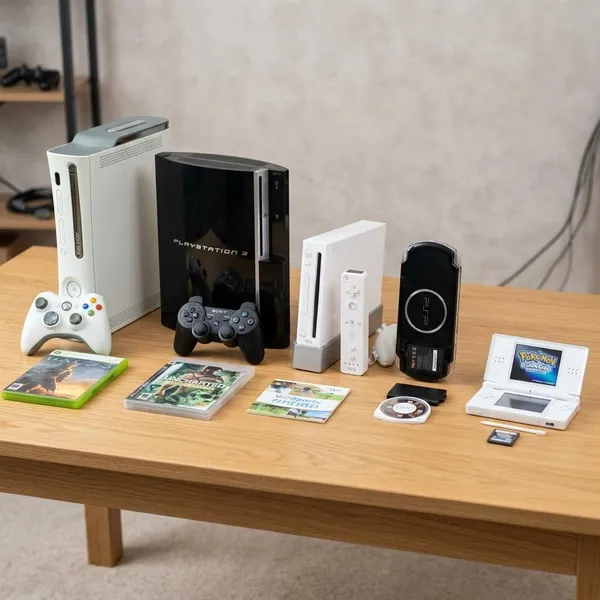
The seventh generation is usually grouped around five major systems: Xbox 360, PlayStation 3, Wii, Nintendo DS, and PSP. The first three defined the living-room battle, while the DS and PSP made handheld gaming just as important to the period.
Xbox 360, PS3, and Wii led home gaming
The Xbox 360, PS3, and Wii were the core home consoles, but they did not compete in the same way. Microsoft pushed online services and early HD momentum. Sony aimed for powerful hardware, Blu-ray, and a growing exclusive library. Nintendo stepped away from the power race and made motion-controlled local play the main attraction.
- Xbox 360: best remembered for Xbox Live, achievements, shooters, and a strong multiplatform library.
- PlayStation 3: strongest for Sony exclusives, Blu-ray playback, and late-generation first-party games.
- Wii: easiest to recommend for Nintendo games, family play, and motion-control nostalgia.
Nintendo DS and PSP led handheld gaming
The Nintendo DS and PSP were not minor extras. The DS made touch controls, dual-screen design, puzzle games, RPGs, and casual titles feel mainstream on a handheld. The PSP went for a sleeker, more console-like feel, with stronger visuals, media playback, and games that often felt closer to home releases.
If you like short, pick-up-and-play sessions, the DS still makes sense. If you want a handheld that feels more like a portable media and gaming device from the mid-2000s, the PSP better captures that side of the era.
When Did the Seventh Generation Begin and End?
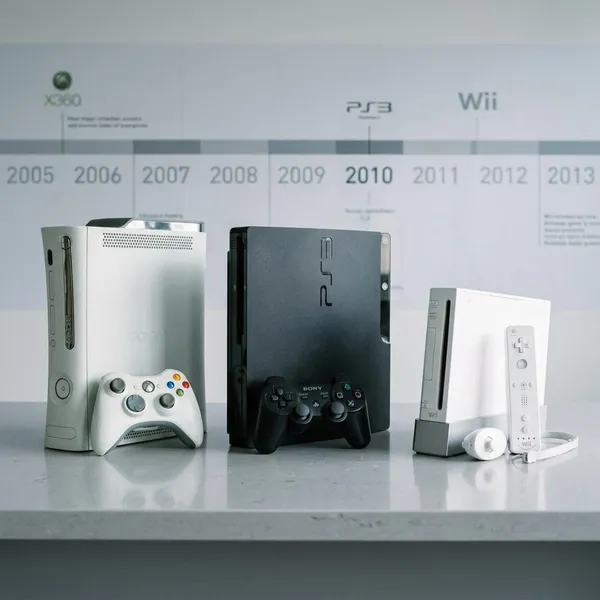
The seventh generation began in the mid-2000s and ended gradually. The Xbox 360 opened the home-console side in 2005, the PS3 and Wii followed in 2006, and the transition away from the era happened slowly once newer systems arrived from 2012 onward.
There is no single clean end date because people did not replace these machines overnight. Large game libraries, cheaper used hardware, cross-generation releases, and familiar online accounts kept the PS3, Xbox 360, and Wii active in many homes well after their successors launched.
Xbox 360 arrived first
The Xbox 360 launched in late 2005, roughly a year before the PS3 and Wii. That head start mattered because it gave Microsoft time to define early expectations around HD graphics, online profiles, achievements, downloadable content, and multiplayer matchmaking.
PS3 and Wii followed
The PS3 and Wii arrived in 2006 and completed the three-way home console race. Sony launched with an expensive but ambitious system built around Blu-ray and long-term technical potential. Nintendo launched with a simpler pitch: play differently, move the controller, and bring more people into the room.
That contrast gave buyers clearer choices. Someone who wanted prestige single-player games and HD movies could justify a PS3. Someone who wanted party games, familiar Nintendo characters, or a console for people who rarely used traditional controllers often found the Wii easier to live with.
Newer systems gradually ended the era
The Wii U started the next home-console generation in 2012, followed by the PS4 and Xbox One in 2013. Even then, the seventh generation faded rather than stopped. Sports games, family titles, budget releases, and huge used-game libraries kept the older systems relevant for years.
- Temporary revisit: buying one used console and a few favorites is still a practical way to sample the era.
- Long-term collecting: check hardware condition, controller availability, digital store limitations, and disc prices first.
- Online-focused nostalgia: be careful, because some servers, stores, or features may no longer work as they once did.
What Defined Seventh-Generation Consoles?
Five changes defined the era more than raw specs alone: HD gaming, online play, digital stores, motion controls, and media features. Some of these existed earlier in limited forms, but the seventh generation made them normal enough that later consoles had to build around them.
HD gaming became standard
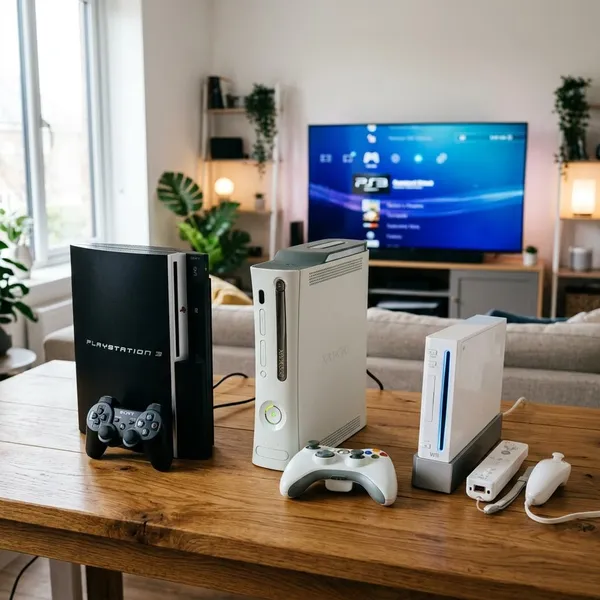
HD gaming was one of the most visible changes. Xbox 360 and PS3 games looked sharper on widescreen HDTVs, and even when games did not run at the highest resolutions, the jump from older standard-definition setups was obvious to many players.
Online play became a core feature
Online play moved from a bonus feature to part of the main console experience. Xbox Live was especially influential, with friends lists, party chat, achievements, matchmaking, and downloadable extras becoming everyday habits for many players.
This changed how games were judged. A shooter or sports game was not only about its campaign or local modes anymore; people cared whether their friends were playing, whether matches were active, and whether extra maps or updates kept the game alive. The downside is that some parts of the era are harder to revisit now because online communities and server support can fade.
Digital game stores reached consoles
Digital stores became a serious part of console gaming through services such as Xbox Live Arcade, PlayStation Store, and WiiWare. Players could download smaller games, demos, add-ons, retro releases, and media without going to a shop.
Motion controls drew in new players
The Wii made motion controls the most public-facing experiment of the generation. Swinging a remote like a tennis racket or bowling ball was easy to understand, which helped the console reach families, older players, and people who did not think of themselves as gamers.
Motion controls were not perfect. They could feel tiring, imprecise, or gimmicky in the wrong game. Still, for local multiplayer and short social sessions, the idea worked well enough to change who felt welcome around a console.
Consoles became media hubs
The PS3, Xbox 360, and even the simpler Wii all helped push consoles into the center of the living room. The PS3's Blu-ray drive was a major selling point, while the Xbox 360 leaned into marketplace content, video services, and a connected dashboard experience.
Which 7th Generation Console Is Best Today?
The best choice today depends less on historical importance and more on what you plan to do with the system. If you want cinematic Sony exclusives and Blu-ray, choose PS3. If you want the feel of late-2000s online console culture, choose Xbox 360. If you want Nintendo games and local multiplayer, choose Wii.
| Best fit today | Start with this console | Check before buying |
|---|---|---|
| Solo play, Sony exclusives, Blu-ray movies | PlayStation 3 | Controller condition, model type, disc drive health |
| Shooters, achievements, multiplayer-era nostalgia | Xbox 360 | Hardware revision, overheating history, online feature availability |
| Family play, Nintendo classics, local sessions | Wii | Remote condition, sensor bar, GameCube support if you want it |
Choose PS3 for Sony exclusives and Blu-ray
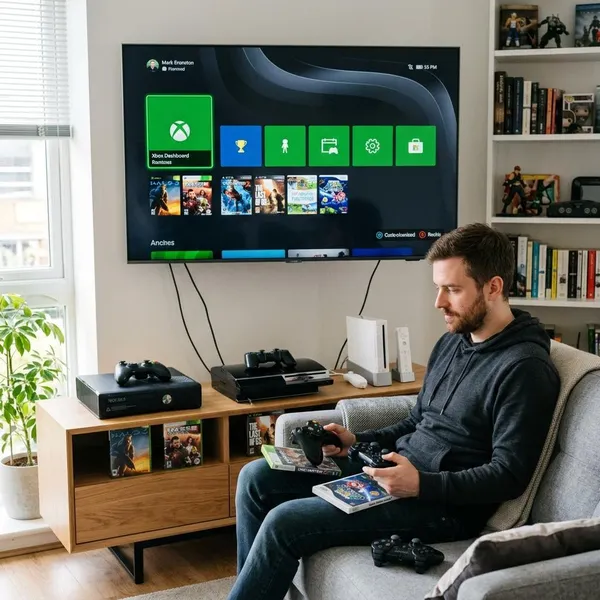
Choose PS3 if your priority is strong single-player games and a system that still works well as a Blu-ray player. Uncharted, inFamous, Demon's Souls, LittleBigPlanet, Killzone 2, and The Last of Us give the platform a clear identity.
It is especially sensible for someone building a small, focused collection rather than trying to own everything from the era. A handful of first-party games and a working Blu-ray drive can make the PS3 feel useful beyond nostalgia.
Choose Xbox 360 for its multiplayer-era library
The Xbox 360 is the strongest pick if the seventh generation means Halo 3, Gears of War, Forza Motorsport, Xbox Live Arcade, achievements, party chat, and big multiplatform releases. It captures the social and competitive mood of the late 2000s better than any other machine from the era.
Choose Wii for Nintendo games and local play
The Wii is still the easiest recommendation for shared play. Wii Sports, Mario Kart Wii, Super Smash Bros. Brawl, Super Mario Galaxy, Donkey Kong Country Returns, and New Super Mario Bros. Wii are still approachable, especially when several people are in the same room.
- For family use: make sure you have working Wii Remotes, wrist straps, and a sensor bar.
- For Nintendo collecting: choose a GameCube-compatible Wii if you want official disc support for GameCube games.
- For casual nostalgia: focus on the best Nintendo titles first, because the full Wii catalog has plenty of weak filler.
Conclusion
The seventh generation is worth remembering because it did not move gaming in only one direction: the Xbox 360 made connected console play feel normal, the PS3 grew into a strong exclusives-and-media machine, the Wii widened the audience, and the DS and PSP kept handheld gaming vibrant. If you are revisiting the era now, pick the system that matches your real use case first—solo exclusives, online-era nostalgia, local Nintendo play, or handheld collecting—then worry about hardware details and condition.