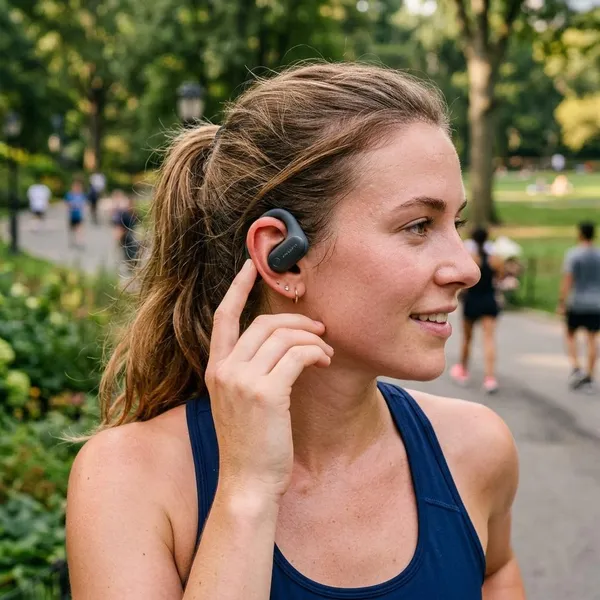
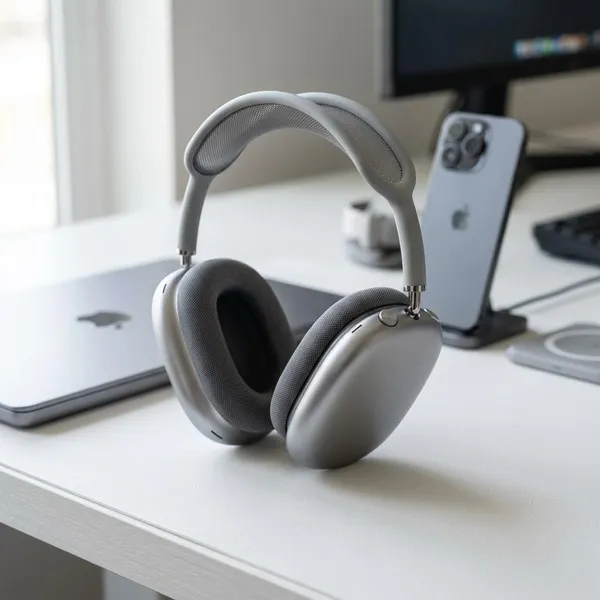
The best airplane headphones are not always the ones with the fanciest sound profile. For flying, start with three checks: strong noise cancellation, a fit you can wear for hours, and a way to plug into the seatback screen if you use in-flight movies. If a pair fails one of those for your usual trips, it can become annoying fast once you are in the air.
What Makes Headphones Good for Air Travel?
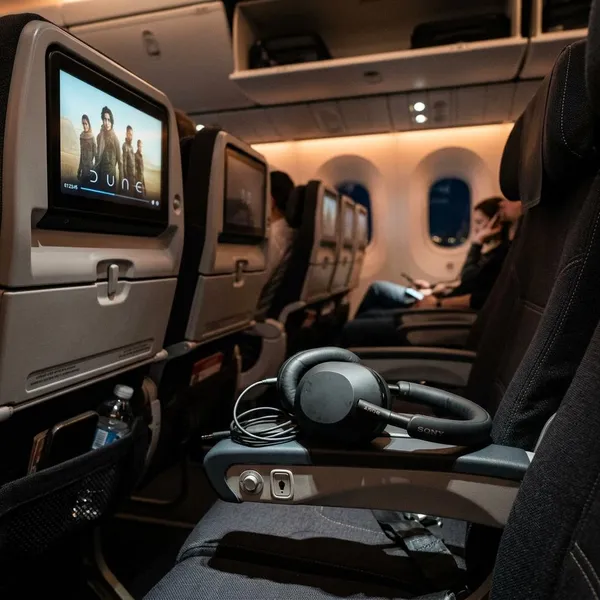
Air travel exposes headphone weaknesses quickly. A slightly tight headband, weak battery, or missing audio cable may not matter at home, but it can ruin a long flight. For most travelers, the order of importance is simple: reduce cabin noise first, stay comfortable second, and avoid connection problems third.
Sound quality still matters, but a plane is not a quiet listening room. Clear dialogue, lower listening volume, and less cabin fatigue usually matter more than tiny differences in detail or soundstage.
Strong ANC for engine noise
Strong active noise cancellation is the most important feature if you fly often. Airplane cabins produce a steady low-frequency rumble, and good ANC is designed to reduce that kind of constant noise better than passive ear padding alone.
Do not expect ANC to erase everything. Announcements, nearby voices, and crying babies can still cut through, but reducing the engine drone makes movies easier to hear and makes quiet time feel less draining.
Comfortable fit for long flights
A comfortable fit matters more on a six-hour flight than it does in a ten-minute store demo. Look for moderate clamp force, soft ear pads, enough earcup space, and a headband that does not create a pressure point.
- Wear glasses? Softer pads usually matter more than maximum clamp.
- Sleep by the window? Bulky earcups may press against the seat or wall.
- Run warm easily? Shallow or sealed pads can feel hot after a few hours.
Long battery life with ANC
Battery life should be judged with ANC turned on, not just by the biggest number on the box. A safe target for most long trips is roughly 25 to 30 hours of real ANC playback, because airport waiting time, delays, and layovers can stretch a travel day well beyond the flight itself.
If you fly only once or twice a year, you may not need a huge battery. If you travel for work, take overnight routes, or often forget to charge before leaving, extra battery headroom and fast charging are worth paying attention to.
Wired support for seatback screens
Wireless headphones are convenient, but many airplane entertainment screens still expect a wired 3.5mm connection. Before buying, check whether the headphones include a cable, support wired playback, and keep ANC available while plugged in.
Compact design for carry-on bags
Good travel design is not just about folding hinges. Check the case size, cable storage, and how easily the headphones fit into your personal item. A protective case that holds the cable and adapter is more useful than a sleek case that wastes space.
For one-bag travelers, earbuds or slimmer over-ear cases can make a real difference. For long-haul travelers with more room, a slightly larger over-ear pair may be worth it if the comfort and ANC are better.
How to Choose Airplane Headphones
Choose based on the flight you actually take, not the product with the loudest marketing. A frequent flyer on long routes should usually spend more on ANC and comfort. Someone taking a short holiday flight once a year can often choose a good mid-range model and be perfectly happy.
| Your travel style | What to prioritize first | What you can worry about later |
|---|---|---|
| Monthly or business travel | Top-tier ANC, comfort, battery reliability | Color, app extras, niche sound settings |
| Long-haul vacation flights | Comfort, wired support, enough ANC | Call quality and office features |
| Short occasional trips | Value, portability, simple setup | Flagship ANC and huge battery life |
| Minimalist packing | Earbud case size or fold-flat design | Maximum over-ear isolation |
Prioritize ANC for frequent flights
If cabin noise wears you down, pay for better ANC before paying for luxury extras. Frequent travelers benefit from strong cancellation not only on the plane, but also in terminals, airport buses, lounges, and hotel lobbies.
Prioritize comfort for long-haul travel
For overnight or intercontinental flights, comfort can beat a small ANC advantage. A pair that blocks slightly more noise is not the better choice if you want to remove it after two hours.
Check wired support for seatback screens
Seatback entertainment is where many wireless-only setups become frustrating. Look for a standard cable option and avoid relying on proprietary accessories that would be hard to replace while traveling.
- Best case: headphones include a 3.5mm cable and work with ANC while wired.
- Acceptable: cable works, but some controls or sound modes are limited.
- Risky: no clear wired support or a hard-to-find special cable is required.
Match battery life to your longest trips
Think in terms of your longest travel day, not just the scheduled flight time. A 10-hour flight can become a 14-hour headphone day once you add boarding, taxi time, delays, connections, and waiting at baggage claim.
Consider size and carry-on space
Size matters most when you fly with only a backpack or personal item. Over-ear headphones usually give better isolation and longer battery life, but the case can take up the same space as a charger pouch or small toiletry bag.
For a long-haul traveler who wants rest, the bulk may be worth it. For a weekend traveler who already carries a laptop, jacket, snacks, and documents in one bag, compact earbuds may be the pair that actually gets packed every time.
How to Connect Headphones to In-Flight Entertainment
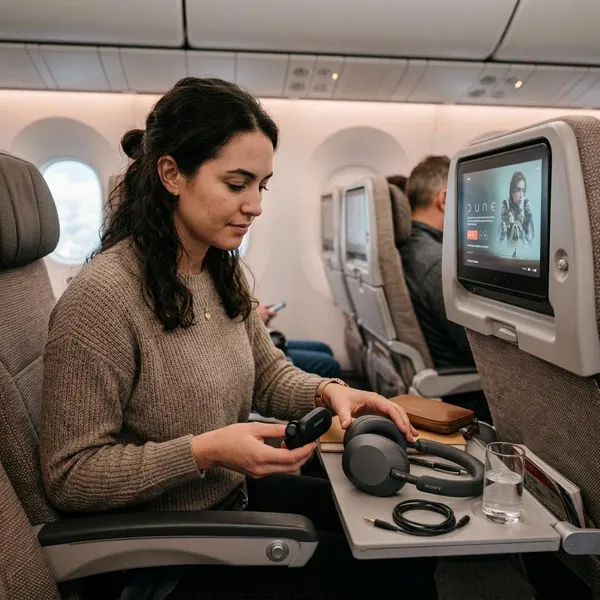
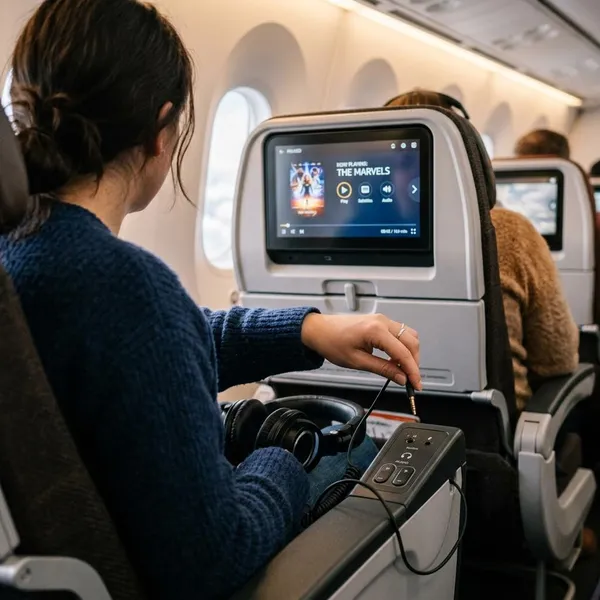
The simplest setup is still a cable. Even if you prefer Bluetooth, packing a small connection kit saves you from guessing what the aircraft will support. A cable, a dual-prong adapter, and a charged Bluetooth transmitter cover most situations without taking much space.
Use a 3.5mm cable for wired playback
Plugging in with a 3.5mm cable is usually the most reliable way to hear seatback entertainment. It avoids pairing issues, battery drain from a transmitter, and lip-sync problems.
Test the cable at home before the trip. Make sure it fits your headphones, plays audio clearly, and works the way you expect if the headphones are powered off or running low on battery.
Add a dual-prong adapter when needed
Some aircraft still use a dual-prong audio jack, especially on older planes or certain long-haul cabins. A small airplane headphone adapter lets your normal cable connect to that socket.
This is a low-cost item that belongs in the headphone case permanently. The mistake is packing it only when you think you will need it, then discovering the older seat jack after takeoff.
Use a Bluetooth transmitter for wireless audio
A Bluetooth transmitter plugs into the seatback audio jack and sends sound to your wireless headphones. It is useful if you dislike cables, use earbuds without a wired option, or want to share audio with another pair of headphones.
Pair and test before watching
Do a quick test before settling into a movie. Start with the easiest method, then switch only if something does not work.
- Plug in the cable or transmitter.
- Confirm audio comes through both sides.
- Check volume before the movie starts.
- Turn ANC on if your headphones support it while connected.
- Keep the adapter and cable in the seat pocket or case, not in the overhead bin.
Are Over-Ear Headphones or Earbuds Better for Flying?
Over-ear headphones are usually better for long flights, while earbuds are better for light packing and short trips. The right choice depends on whether you care more about quiet, comfort, or luggage space.
If you can, choose based on your most demanding trip. A pair that works for a long overnight flight will also work for a short hop. The opposite is not always true.
Over-ear headphones offer better noise blocking
Over-ear models usually block more cabin noise because they combine ANC with physical coverage around the ear. That makes them the safer choice if engine rumble, seatmate chatter, or general cabin noise bothers you.
They are also more forgiving than earbuds if you struggle to get a perfect seal. Earbuds can perform well, but a poor fit can weaken ANC quickly.
Earbuds take up less luggage space
Earbuds win easily on portability. Their case fits in a pocket, they are simple to carry through airports, and they do not compete with larger items in your bag.
They make the most sense for short flights, minimalist packing, or travelers who already own strong ANC earbuds and do not want to buy a second travel-only pair.
Over-ear models suit longer listening
For several movies, a full work session, or an overnight route, over-ear headphones usually feel more relaxed. They spread pressure around the ears rather than putting tips inside the ear canal.
- Choose over-ear if you want the quietest cabin experience.
- Choose over-ear if you wear headphones from boarding to landing.
- Choose over-ear if charging earbuds mid-trip sounds annoying.
Earbuds suit lighter travel
Earbuds are easier to remove during boarding, meal service, announcements, and passport checks. That small convenience matters on short trips where you are constantly taking headphones in and out.
They also work well as a backup. If your over-ear headphones run out of battery or feel too warm, earbuds can keep the rest of the trip simple.
Are Noise-Cancelling Headphones Worth It on a Plane?
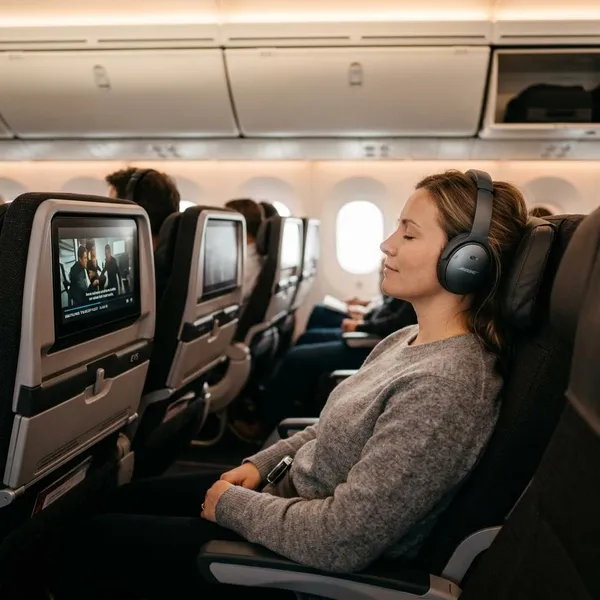
Noise-cancelling headphones are worth it on a plane for most people who fly more than occasionally or take longer routes. ANC does not just improve music; it reduces the constant background noise that makes flights feel tiring.
The main question is not whether ANC helps. It is how much you should spend for the amount you fly.
ANC reduces steady engine noise
Airplane engine noise is exactly the kind of steady sound ANC handles best. Even mid-range noise cancellation can make the cabin feel calmer, while stronger systems make a bigger difference on long routes.
ANC makes quiet audio easier to hear
With less cabin rumble, you do not have to push the volume as high to hear dialogue, podcasts, or audiobooks. This is especially useful for movies with quiet scenes or speech-heavy content.
If your main frustration is constantly adjusting volume during a flight, better ANC may help more than simply buying headphones with louder output.
ANC improves comfort on long flights
Noise fatigue is real on longer flights. A quieter cabin can make it easier to rest, read, work, or sit through delays without feeling as worn out.
ANC matters less on short trips
For flights under two hours, premium ANC is nice but not essential. If you mostly listen for a short time or travel rarely, a good pair of ANC earbuds or budget over-ear headphones may be the smarter buy.
ANC still helps during boarding, taxiing, and waiting on the runway. It just becomes harder to justify paying flagship prices if your exposure to cabin noise is limited.
Conclusion
Pick the headphones that solve your most common flight problem first: noise, comfort, connection, or packing space. For long flights, over-ear ANC headphones with wired support are usually the safest choice; for short trips or one-bag travel, good ANC earbuds can be enough. The pair worth buying is the one you will actually wear, charge, pack, and connect without fuss.