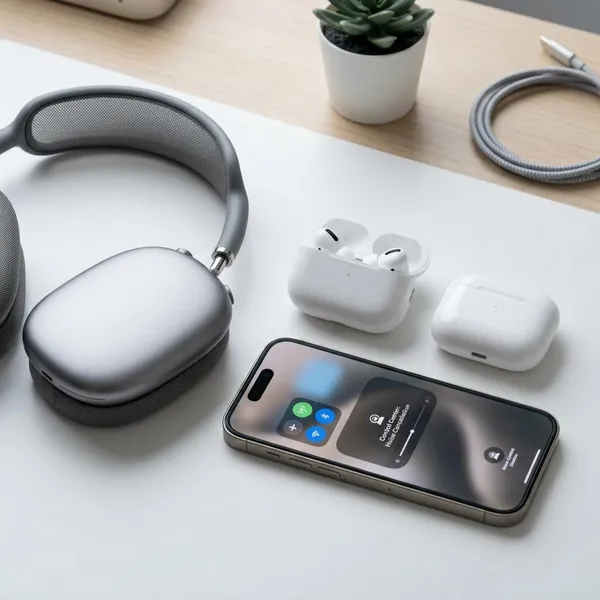
If you are choosing between the two AirPods 4 models, start with where you listen most. The standard version is the better value for quiet rooms, calls, walks, and casual listening, while AirPods 4 with ANC are worth the extra cost if buses, trains, office chatter, or travel are part of your routine.
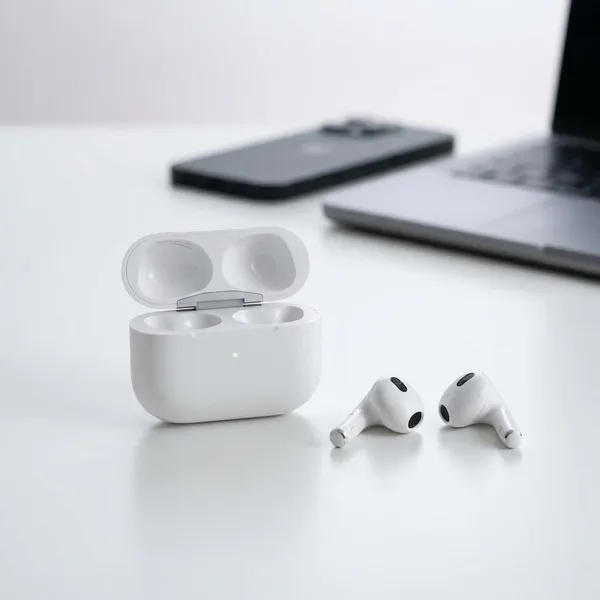
AirPods 4 at a Glance
AirPods 4 keep the familiar open-ear feel but make the buying choice more specific than before. Both models share the H2 chip, USB-C charging, IP54 resistance, and Apple's easy pairing, but only one version adds noise-control features and the upgraded case.
Open-fit wireless earbuds
AirPods 4 sit in your ears instead of sealing the ear canal with silicone tips. That makes them easier to wear if you dislike pressure, plugged-up sound, or the feeling of in-ear earbuds during long calls.
The tradeoff is noise isolation. They are comfortable for a desk, kitchen, walk, or relaxed commute, but they will not block as much outside sound as sealed earbuds. If you want the strongest isolation, especially for planes or loud gyms, open-fit earbuds are not the safest bet.
H2 chip in both models
Both versions use Apple's H2 chip, so the cheaper model does not feel like a stripped-down earbud in everyday use. You still get fast pairing, smooth switching between Apple devices, Adaptive EQ, Personalized Spatial Audio, and Voice Isolation for calls.
Standard and ANC versions
The standard AirPods 4 cover the basics well: open fit, good Apple-device convenience, USB-C charging, and the same core sound processing. AirPods 4 with ANC add the features that matter when your surroundings keep changing.
- Choose standard AirPods 4 if you mostly listen at home, in a quiet office, or during short walks.
- Choose AirPods 4 with ANC if you often deal with engines, traffic, shared workspaces, or travel noise.
- Skip both for Pro-style earbuds if you need silicone tips, stronger bass seal, or more secure sports fit.
Up to 5 hours of listening
The standard AirPods 4 are rated for up to 5 hours of listening on one charge. The ANC model can also reach up to 5 hours with noise control off, but drops when noise cancellation is active.
For most people, the case matters more than the single-charge number. If you listen in chunks during the day, the earbuds will usually go back into the case often enough that battery anxiety stays low.
IP54 dust and water resistance
Both AirPods 4 models and their cases have an IP54 rating for dust, sweat, and water resistance. That is fine for light workouts, a sweaty walk, or getting caught in a little rain, but it is not permission to swim, shower, or rinse them under running water.
AirPods 4 vs AirPods 4 with ANC
The upgrade decision is less about sound quality alone and more about control. If you regularly turn up volume just to hear podcasts over background noise, the ANC model will probably feel more useful than the standard version.
| Daily situation | Better pick | Why it matters |
|---|---|---|
| Quiet home or desk listening | Standard AirPods 4 | You get the same basic AirPods experience without paying for noise tools you may rarely use. |
| Train, bus, airport, or busy office | AirPods 4 with ANC | Noise cancellation, Transparency, and Adaptive Audio make the earbuds easier to live with. |
| Frequent case misplacing | AirPods 4 with ANC | The case speaker can help you find it nearby through Find My. |
| Simple occasional use | Standard AirPods 4 | The core features are usually enough for music, calls, and videos. |
ANC adds active noise cancellation
Active Noise Cancellation is the main reason to pay more. It reduces steady background sound such as traffic hum, train rumble, ventilation, and general room noise, so speech and music are easier to hear without pushing the volume as high.
Because AirPods 4 are still open-fit earbuds, the effect will not be as sealed-off as earbuds with silicone tips. Think of it as making noisy places more manageable, not turning them silent.
ANC adds Adaptive Audio and Transparency
Transparency mode lets outside sound through when you need awareness, while Adaptive Audio adjusts noise control as your environment changes. This is useful if you move from a quiet street to a station platform, or from focused work to a quick conversation.
Conversation Awareness can lower your audio when you start speaking. It is not essential for everyone, but it removes some of the awkward tapping and pausing that happens when you wear earbuds during errands or office hours.
ANC gets a wireless charging case
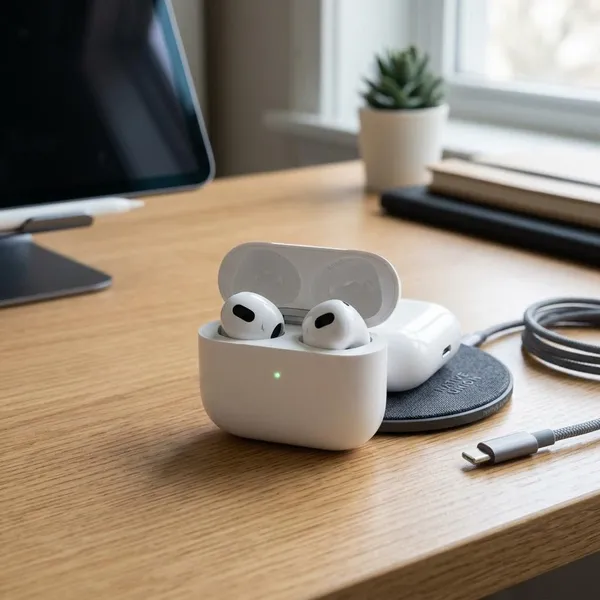
The ANC version includes a case that supports wireless charging, in addition to USB-C. If you already have a Qi pad or Apple Watch charger on a desk or bedside table, this makes small top-ups easier.
ANC adds a Find My case speaker
The case speaker is a small feature that can matter a lot in real life. If your case often disappears under papers, inside a backpack, or between sofa cushions, being able to make it play a sound is more useful than staring at a last-known location.
ANC costs more for extra noise control
The extra cost makes sense when the added features solve a problem you actually have. For a daily commuter, ANC and Transparency can be felt every morning; for someone who mostly uses earbuds for evening videos at home, the standard model is the cleaner buy.
How Do AirPods 4 Sound and Feel?
AirPods 4 are made for easy everyday listening, not for people who want deep manual tuning or a sealed studio-style sound. The best way to judge them is by comfort, call clarity, fit, and how little effort they require during normal use.
Adaptive EQ adjusts the sound
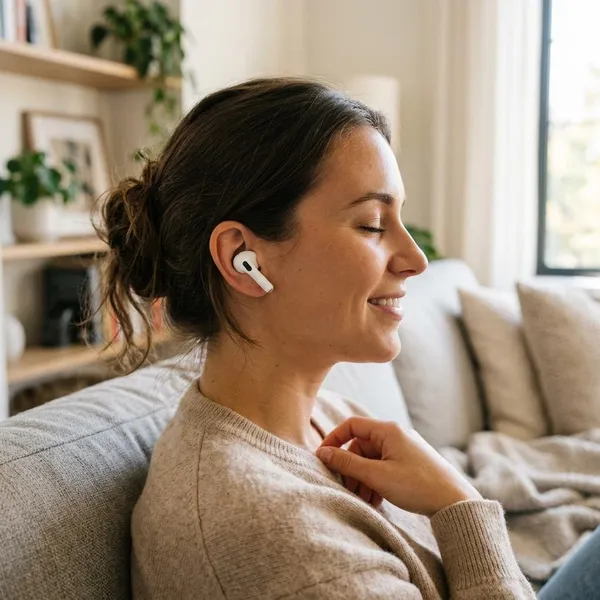
Adaptive EQ adjusts the sound based on how the earbuds sit in your ears. That matters with open-fit earbuds because small fit differences can change how full or thin music feels.
You should not expect a full custom EQ system. The appeal is that you can put them in and get a balanced, polished sound without opening settings every time.
Spatial Audio adds a wider soundstage
Personalized Spatial Audio can make supported movies, shows, and music feel wider than basic stereo playback. It is most noticeable when watching video on an iPhone or iPad, where voices and effects can feel less flat.
Voice Isolation improves calls
Voice Isolation helps your voice stand out during calls when there is background noise around you. That is useful for quick work calls from a café, voice notes on a walk, or family calls while other people are moving around nearby.
If calls are a major part of your earbud use, this feature may matter more than a small difference in music detail. Earbuds that sound fine but make you hard to hear become annoying quickly.
Open fit avoids silicone ear tips
The open fit is the comfort win. If silicone tips make your ears sore after an hour, AirPods 4 are likely to feel easier for long listening sessions, especially for podcasts, meetings, and casual music.
- Good fit: long calls, relaxed listening, awareness while walking.
- Less ideal: loud workouts, strong bass demands, maximum noise blocking.
Redesigned shape improves stability
Apple changed the shape to help AirPods 4 sit more securely than older open AirPods, but fit is still personal. They should be fine for walking, errands, and light gym sessions; if earbuds often fall out of your ears, try them before committing if possible.
AirPods 4 Battery and Charging
Battery life is good enough for normal daily blocks of listening, but the numbers matter if you keep earbuds in for long stretches. The standard model lasts longer with all features considered, while the ANC model trades some runtime for better noise control.
Standard AirPods 4 last up to 5 hours
The standard AirPods 4 are rated for up to 5 hours of listening per charge. That covers most commutes, study sessions, walks, and evening streaming without needing a mid-session recharge.
ANC lasts up to 4 hours with noise cancellation
AirPods 4 with ANC last up to 4 hours when noise cancellation is on. That is the number to focus on if you plan to use ANC heavily, not the longer figure with noise control disabled.
For a short commute, the drop probably will not matter. For a long travel day, you may need to put them back in the case during breaks instead of expecting one continuous stretch.
Both models support USB-C charging
Both cases charge by USB-C, which is a welcome practical upgrade if your phone, tablet, laptop, or power bank already uses the same cable. It also makes travel simpler because you are less likely to pack a cable just for your earbuds.
ANC case supports wireless charging
The ANC case supports wireless charging, so it can sit on a charging pad instead of being plugged in every time. This is not a must-have feature, but it is convenient if you already charge other devices wirelessly.
Both reach up to 30 hours with noise control off
With the charging case, both models can reach up to 30 hours of total listening when noise control is off. If ANC stays on, the ANC model's total listening time is lower, so heavy noise-cancellation users should judge battery life by their real use rather than the best-case figure.
Conclusion
The standard AirPods 4 are the sensible pick if you want comfortable open earbuds for quiet daily use, while AirPods 4 with ANC are the stronger choice if background noise regularly gets in the way. Pay for the ANC model when it will solve a daily annoyance; otherwise, keep the money and choose the simpler version.