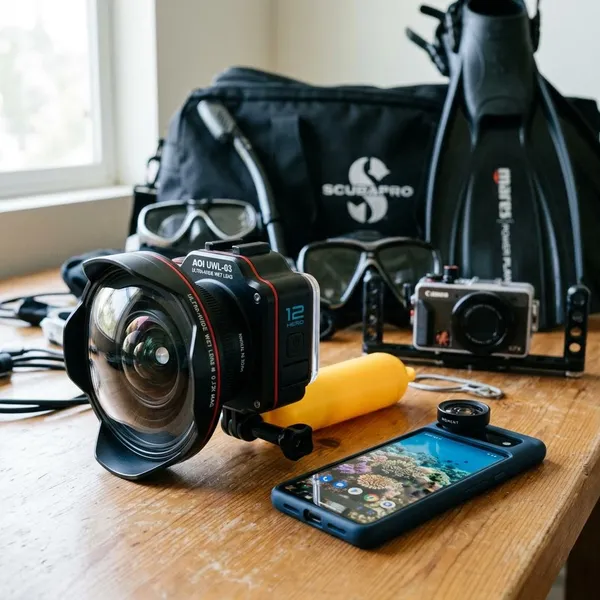
If your GoPro or phone footage looks too tight once it goes underwater, an aoi ultra-wide lens for gopro & smartphone cameras is worth considering. The AOI UWL-03 helps bring back a wider view through a flat housing port, which is most useful when you want to stay close to a subject without losing the reef, wreck, diver, or blue water around it.
Is the AOI UWL-03 Worth Buying?
For underwater shooting, the AOI UWL-03 is usually a worthwhile upgrade if three things line up: your housing is compatible, you actually shoot wide scenes underwater, and you are willing to test settings before a dive. If most of your clips are on land, the value drops quickly because the lens is solving an underwater problem.
- Buy it first for underwater width: reefs, wrecks, divers, turtles, and travel clips benefit most.
- Check compatibility before price: the right housing matters more than choosing the most expensive lens version.
- Match the model to your diving: shallow vacation use and frequent deeper diving do not need the same build.
- Skip it for mostly land content: it adds bulk without fixing a real topside issue.
Worth it for wider underwater footage
This is the strongest reason to buy it. A flat port makes many action cameras and phones look more zoomed in underwater, so wide reef scenes, buddy shots, and wreck exteriors can feel cramped. The AOI UWL-03 gives back a broader view without forcing you to back away and shoot through more water.
Worth it for close-focus wide shots
Close-focus wide-angle is where the lens starts to feel less like an accessory and more like a creative tool. You can put coral, a diver's hand, a small statue, or a wreck detail near the camera while still keeping the background visible.
Worth it for compatible GoPro housings
With a compatible GoPro housing, the UWL-03 can be a simple way to make HERO footage feel wider and more natural underwater. It is especially useful for travel divers who want better clips without moving to a larger camera rig.
Do not assume every GoPro case works the same way. The mount type, port position, lens hood, video mode, and stabilization crop all affect whether the frame is clean or shows dark corners.
Worth it for supported smartphone housings
Smartphone users can get a big improvement, but alignment is the deal-breaker. Phones have different camera positions, and many use multiple lenses, so the wet lens must sit over the correct camera module.
A good fit makes sense for snorkeling holidays, shallow reef dives, and creators who already trust their phone's color and detail. A poor fit is frustrating: you may get soft edges, vignetting, or the phone switching to the wrong lens mid-shot.
Less useful for filming mainly on land
On land, the AOI UWL-03 is usually not the upgrade I would prioritize. The flat-port crop problem is gone above water, and the lens adds one more fragile, bulky item to carry. For hiking, city travel, family clips, or general GoPro footage, better mounts, audio, batteries, or lighting will usually help more.
What the AOI UWL-03 Does Underwater
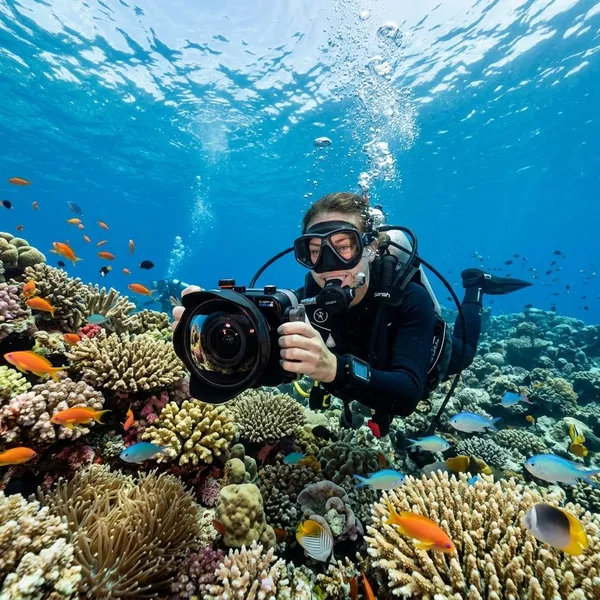
The AOI UWL-03 is a wet wide-angle conversion lens. It attaches to the front of a supported underwater housing and helps counter the narrower view caused by shooting through a flat port.
Restores a wider field of view
Without a wet lens, a GoPro or phone that looks wide on land can feel surprisingly tight underwater. The UWL-03 restores much of that wide feel, so you spend less time trying to squeeze a diver, reef wall, or turtle into the frame.
Fits more background into close shots
A close subject becomes more interesting when the surroundings still tell the story. For example, a coral head in the foreground looks stronger when you can also see blue water, sun rays, and a buddy diver behind it.
Reduces the flat-port crop
The flat-port crop is one of the main reasons compact cameras disappoint underwater. The AOI UWL-03 reduces that tight, cropped look optically rather than trying to fake width in software.
Creates more immersive underwater footage
Immersion comes from scale: a diver beside a wreck entrance, a reef stretching into blue water, or a ray passing through the frame with sand and water movement around it. The UWL-03 helps include those cues, so the footage feels closer to what the dive actually felt like.
Key Differences Between AOI UWL-03 Models
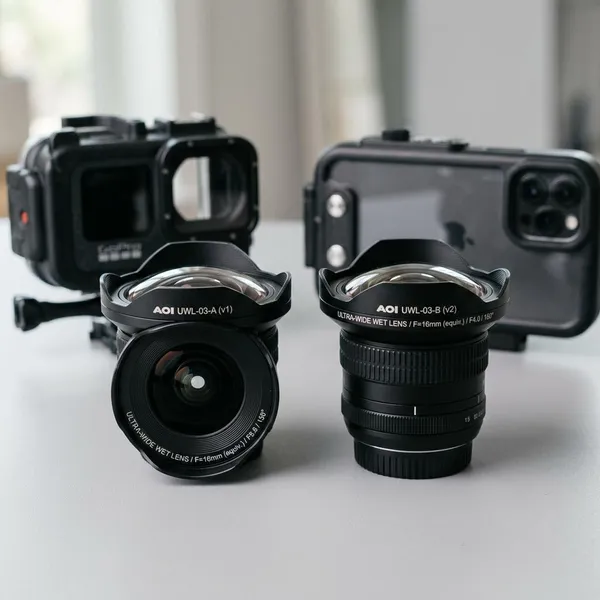
The AOI UWL-03 models are not mainly separated by how wide they are. The bigger differences are dome material and depth rating, while the shared optical effect remains similar across the line.
| Model choice | Best fit | Main trade-off |
|---|---|---|
| UWL-03II | Recreational divers, snorkelers, lighter travel setups | Lower cost and weight, but a polycarbonate dome needs careful handling |
| PRO models | Frequent divers, deeper profiles, rougher travel or shore entries | More durable glass dome and higher depth rating, with higher cost |
UWL-03II uses a polycarbonate dome
The UWL-03II uses a polycarbonate dome, which helps keep the lens lighter and usually more affordable. That makes it a sensible option for someone filming holiday dives, pool sessions, or normal recreational reef trips.
The trade-off is care. Polycarbonate can perform well, but rough cleaning, sand, and loose storage with other gear can leave marks. Rinse first, use a clean microfiber cloth, and keep the dome covered when it is not on the housing.
PRO models use an optical glass dome
The PRO versions use an optical glass dome. That does not mean every clip automatically looks dramatically better, but it can be a better long-term choice if the lens will see frequent travel, shore diving, boat bags, and regular handling.
UWL-03II is rated to 60 meters
The UWL-03II is rated to 60 meters, which is already beyond what many recreational users will need. If your diving is mostly snorkeling, shallow reefs, resort dives, or standard recreational profiles, this rating is unlikely to be the limiting factor in your setup.
PRO models are rated to 100 meters
PRO models are rated to 100 meters, so they make more sense for advanced users, deeper diving plans, or anyone who wants extra margin in demanding conditions. The rest of the rig still needs to match that use, including the housing, mount, lights, and your own training.
All models provide 0.73x magnification
All UWL-03 models provide 0.73x magnification. In practical terms, that is the conversion effect that helps widen the image underwater instead of relying on digital tricks or heavy cropping.
All models reach 140 degrees underwater
All models are designed to reach about 140 degrees underwater, although the final visible frame depends on the camera, housing, shooting mode, and stabilization. If you enable a strong crop mode, you may not see the full quoted angle in the finished clip.
Best Settings for the AOI UWL-03
The best setup is the one that gives you a wide, clean frame with no hood edges, dark corners, or accidental camera-module switching. Start wide, turn on the stabilization you actually plan to use, then check the corners before the dive.
Use a wide video mode
Start with a wide video mode rather than a narrow or heavily cropped one. The whole point of the UWL-03 is to regain underwater width, so a tight mode works against the lens.
Avoid settings that reveal the lens hood
If the hood appears in the corners, do not keep filming and hope it disappears in editing. Check three things in order:
- Mount position: make sure the lens is fully seated and centered.
- Hood orientation: confirm it is not rotated or tilted into the frame.
- Video mode: try a slightly different field of view or stabilization setting.
Check the frame after enabling stabilization
Stabilization can change the crop, so check the frame after turning it on, not before. A setup that looks clean with stabilization off may show hood edges once the camera starts correcting movement.
For calm reef swimming, a lighter stabilization setting may keep more width. For fast finning or surge, you may accept a little crop to get steadier footage.
Keep the hood correctly aligned
A misaligned hood is a small mistake that creates very obvious footage problems. Before entering the water, look at the screen and make sure the corners look even. If you remove and reattach the lens underwater, repeat that check.
Move close to your subject
Wide-angle underwater footage works best close up. If the subject is too far away, the lens may show a wider scene, but the clip can still look flat, blue, and low in detail.
Test the setup before diving
Record a short clip in a pool, rinse tank, shoreline, or shallow water before relying on the setup for an important dive. Check the corners, hood position, bubbles on the dome, and whether stabilization changes the frame. Two minutes of testing can save an entire dive's footage.
Best Uses for the AOI Ultra-Wide Lens
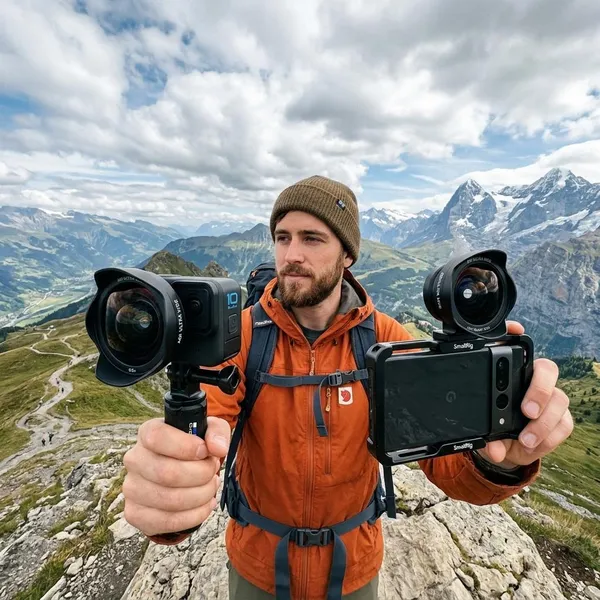
The AOI ultra-wide lens is best when the scene needs context. It is not the right tool for every subject, but it shines when you want the viewer to understand space, scale, and distance underwater.
Reef scenes
Reefs are a natural fit because they have layers: foreground coral, fish movement, sand channels, blue water, and sunlight. The UWL-03 helps include those layers instead of turning the scene into one tight patch of coral.
Wreck interiors
Use extra caution with wreck interiors. The lens can make doorways, corridors, machinery, and diver movement look much clearer in tight spaces, but it does not replace proper training, lighting, buoyancy control, or a safe dive plan.
Large marine life
Large animals often look better with space around them. A turtle, ray, sea lion, or large fish feels more impressive when the frame includes the reef, sand, or open water that gives it scale.
Diver portraits
Diver portraits are stronger when they show more than a mask and bubbles. With the AOI UWL-03, you can stay close enough for a clear face or silhouette while still including the reef wall, wreck entrance, or blue background.
Close-focus wide-angle video
This is one of the most rewarding uses for the lens. Put an interesting foreground subject close to the dome, then compose so the background still adds shape and depth.
- Good subjects: coral heads, anemones, signs, statues, wreck details, or a diver holding position.
- Best conditions: clear water, controlled movement, and a subject you can approach without contact.
- Common mistake: staying too far away and ending up with a wide but empty frame.
Underwater travel content
For travel footage, the lens helps show the location instead of only isolated fish clips. A snorkeler over a shallow reef, a diver near a wall, or a group entering blue water tells a better story when the surroundings fit into the frame.
Conclusion
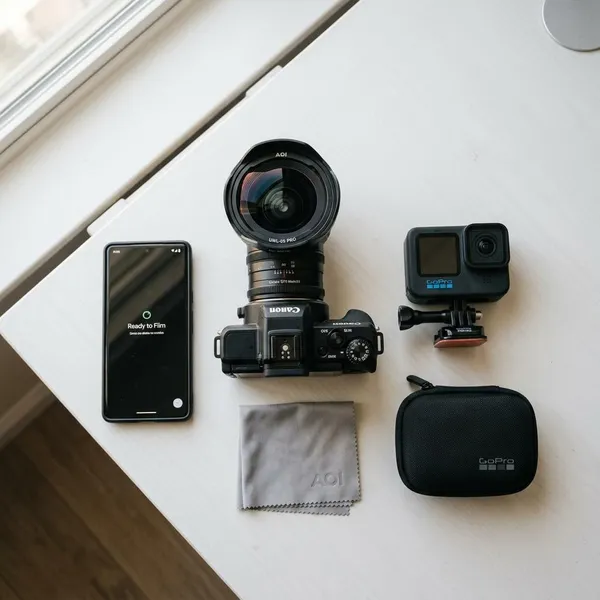
The AOI UWL-03 makes the most sense if your priority is underwater footage, not general everyday filming. Choose the UWL-03II if you want the main wide-angle benefit for normal recreational use, and look at the PRO models if you dive deeper, travel hard with gear, or want the durability of a glass dome. The smartest purchase is the one that fits your housing first, your diving style second, and your budget third.