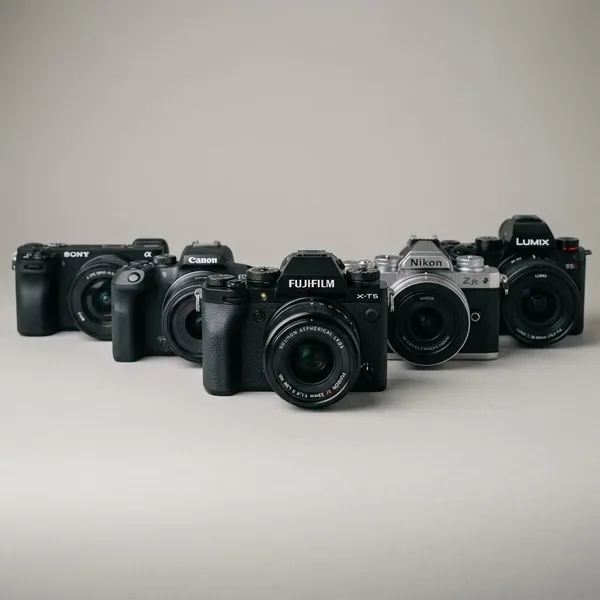
If you are choosing between APS-C mirrorless cameras, start with what you shoot most and the lenses you can actually afford, not the body with the longest spec sheet. Canon is easiest for simple beginner setups, Sony is the safest pick for tracking moving subjects, Fujifilm has the strongest APS-C lens ecosystem and stills experience, and Nikon works well if you like its handling and only need a compact everyday kit.
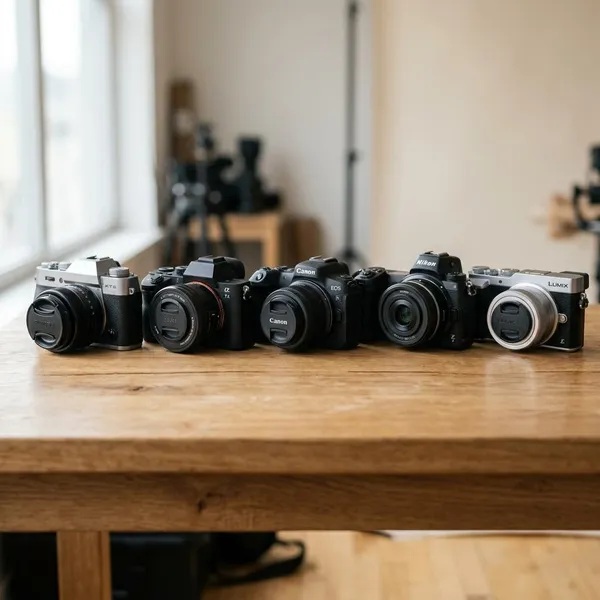
APS-C mirrorless cameras to shortlist
The quickest way to narrow the choice is to match the camera to your most common situation. A parent photographing children indoors needs a different body from someone who mainly shoots landscapes, travel, birds, or short video clips.
| Camera | Best fit | Main thing to check before buying |
|---|---|---|
| Canon EOS R50 | First camera, family use, simple travel | Whether the available RF-S lenses cover your needs |
| Nikon Z50II | Everyday photography with comfortable handling | Whether you are happy with a smaller APS-C lens range |
| Fujifilm X-T5 | Detailed stills, JPEG color, mature lens choice | Whether you want its dial-based control style |
| Sony a6700 | Children, pets, events, subject tracking | Whether the body feels comfortable with your lenses |
| Fujifilm X-S20 | Hybrid photo and video use | Whether it offers enough video comfort for your workflow |
| Canon EOS R7 | Wildlife, sports, distant action | Telephoto lens cost and availability |
What to compare across APS-C camera systems
Compare the system as if you were buying a small kit, not just a body. A useful first check is simple: body, everyday zoom, one fast prime, spare battery, and any video or telephoto lens you already know you want. That total is closer to the real cost than a body-only sale price.
Autofocus for your subjects
Autofocus matters most when the subject does not wait for you. If you photograph toddlers, dogs, dancers, sports, or events, tracking performance should sit near the top of your list; if you mainly shoot landscapes, food, products, or posed portraits, almost any current body will focus well enough.
For shallow-depth portraits, eye autofocus is still worth having because it raises the keeper rate when you shoot wide open. The practical test is not whether the camera has eye detection on the spec sheet, but whether it keeps focus when the subject turns, walks, or briefly leaves the center of the frame.
Lens choice and total cost
Lens choice is where many camera decisions become clear. Sony and Fujifilm usually give APS-C buyers more native and third-party options, while Canon and Nikon bodies may still be excellent if the available lenses match your simpler needs.
- Beginner kit: standard zoom plus one small prime.
- Portrait kit: fast prime first, then a better zoom if needed.
- Travel kit: compact zoom and one low-light lens.
- Wildlife kit: telephoto zoom before extra accessories.
If the lenses you want are large, expensive, or only available as full-frame designs, the body bargain may not be a bargain anymore.
Body and lens size
APS-C is attractive because it can stay smaller than full frame, but the camera body is only half the story. A tiny body with a heavy zoom may be less pleasant than a slightly larger body with a better grip.
For travel, judge the setup with the lens you will leave on the camera all day. For home and family use, also think about where the camera will sit: a kit that fits in a small bag or drawer is more likely to be used than one that feels like an event to carry.
Grip, controls, and viewfinder
Handling is personal, but it is not a minor detail. A deeper grip helps with longer lenses, a clear viewfinder helps in bright daylight, and good controls make it easier to change settings before the moment disappears.
Fujifilm tends to appeal to people who like visible dials and a more tactile process. Canon and Nikon often feel approachable quickly. Sony is very efficient once customized, though some buyers need more time to feel at home with the menus and button layout.
Stabilization for handheld shooting
In-body stabilization is useful for handheld still subjects, evening city scenes, interiors, and casual video. It helps reduce blur from your hands, but it will not freeze a child running across a room or a bird in flight.
That distinction matters when choosing a body. If you shoot static subjects in low light, stabilization can be more useful than extra burst speed. If your subjects move quickly, autofocus and shutter speed matter more.
Video modes and recording limits
For casual video, prioritize dependable autofocus, a screen that works for your filming style, microphone support, good color, and manageable file sizes. Advanced codecs and log profiles are helpful only if you plan to edit seriously and understand the workflow.
If you film long clips, interviews, classes, or events, check real-world recording limits and heat behavior from current reviews before buying. For short family clips and travel footage, the simpler camera may be the one you enjoy using more often.
Useful lenses for an APS-C mirrorless camera
A smart lens plan does more for your photos than chasing a slightly newer body. Most people are better served by one practical zoom and one fast prime than by spending the whole budget on the camera body and staying with a weak kit lens forever.
Think of lenses by the problem they solve: convenience, low light, background blur, or reach. That keeps you from buying lenses that overlap too much or sit unused.
Compact zooms for travel
A compact standard zoom is the lens to buy first if you want one camera for walks, trips, family gatherings, food, and everyday scenes. On APS-C, something in the usual standard-zoom range gives you a useful wide-to-short-telephoto field of view without constant lens changes.
The trade-off is low light and background blur. If your travel photos are mostly daytime streets and landscapes, the zoom may be enough. If you often shoot restaurants, indoor family moments, or evening scenes, plan for a fast prime next.
Fast primes for portraits
A fast prime changes the look of your photos quickly because it gives stronger subject separation and better low-light flexibility. On APS-C, common portrait-friendly choices sit around the normal-to-short-telephoto range, depending on whether you prefer environmental portraits or tighter head-and-shoulder framing.
- Indoor family photos: choose a wider prime so you are not backed into a wall.
- Classic portraits: choose a slightly longer prime for smoother backgrounds.
- Low-light events: prioritize aperture and autofocus reliability over size alone.
Telephoto zooms for distant subjects
A telephoto zoom is worth buying when you cannot simply walk closer: wildlife, school sports, outdoor performances, and candid moments from a distance. APS-C is helpful here because the crop factor gives a tighter angle of view, but you still need a lens with enough reach and autofocus speed for the subject.
Do not buy a telephoto only because it sounds useful. If you photograph distant subjects every weekend, it may become your most important lens. If you only imagine using it once or twice a year, renting first or choosing a lighter option may be the better decision.
Conclusion
The best APS-C choice is the one that fits your subject, your hands, and your first two lenses. Pick the Canon EOS R50 for an easy beginner setup, the Nikon Z50II for comfortable everyday shooting, the Fujifilm X-T5 for detailed stills, the Sony a6700 for tracking movement, the Fujifilm X-S20 for balanced hybrid use, or the Canon EOS R7 for wildlife and action. If the full kit still feels affordable and portable after adding lenses, you are much more likely to enjoy the camera long after the new-body excitement wears off.