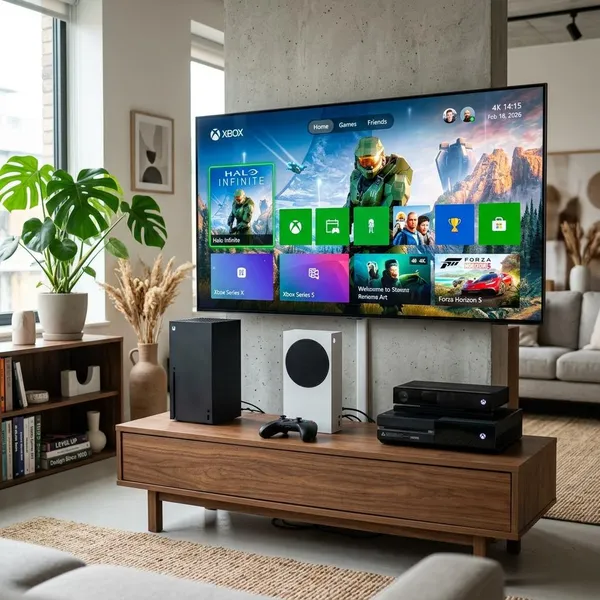
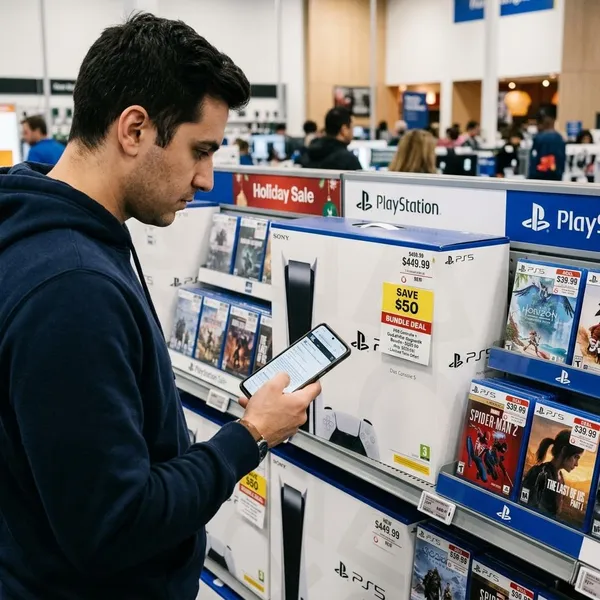
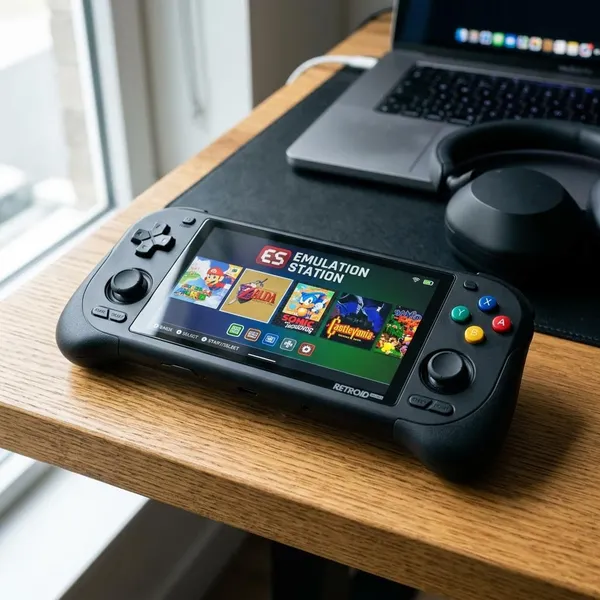
Apple does not currently sell a dedicated gaming console, so the closest Apple setup is usually Apple TV 4K with Apple Arcade or App Store games and a compatible controller. That can be perfectly fine for casual living-room play, kids, or an Apple-heavy household, but it is not a real substitute for PlayStation, Xbox, or Nintendo Switch if you want the biggest game library.
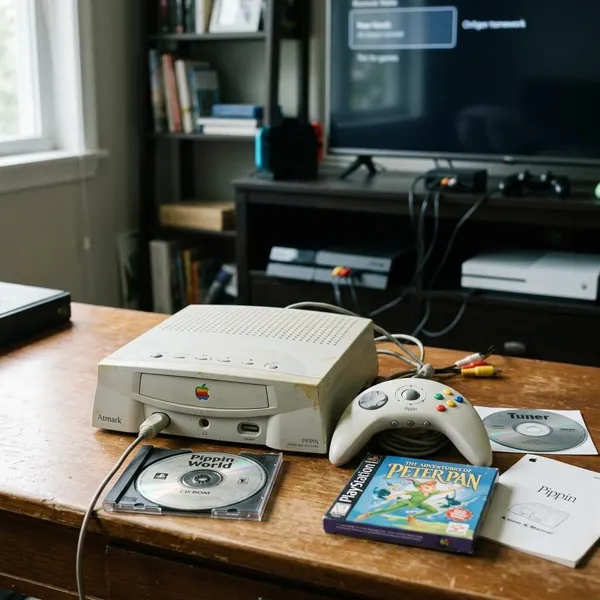
Why Did the Apple Pippin Fail?
The Apple Pippin failed because it asked buyers to take a big chance on an expensive, unclear platform at a time when better-known game systems already had momentum. It was launched in the mid-1990s through Apple's partnership with Bandai, but it never gave players a strong enough reason to choose it over established consoles.
Its $599 price was difficult to justify
At $599, the Pippin was a tough sell for families and gamers who could buy more recognizable gaming systems for less. A high launch price can work when a product feels premium and essential, but the Pippin did not have the exclusive games or clear identity needed to make that price feel safe.
PlayStation and Sega offered stronger competition
Sony and Sega had a clearer pitch: buy this machine to play games. The PlayStation in particular was building cultural momentum, while Sega already had console experience and retail presence. Against that, the Pippin felt like a confusing hybrid rather than the obvious next system to own.
For a player standing in a store, that difference mattered. A console purchase is not just about the box; it is a bet on the games that will come later. The Pippin never made that bet feel comfortable.
The platform struggled to gain market traction
Once sales stayed low, the platform had the classic console problem: too few buyers meant less developer interest, and weak software support made even fewer people want to buy one. The Pippin reportedly sold in very small numbers before being discontinued, which left it as a historical curiosity rather than a serious console platform.
- Unclear audience: it was not clearly a console, computer, or media box.
- Weak software pull: there were not enough must-play games.
- Low confidence: buyers had safer choices from brands with stronger gaming momentum.
How Apple Gaming Works Today
Apple's current gaming strategy is not built around one console. It is spread across iPhone, iPad, Mac, Apple TV 4K, Apple Arcade, controller support, and account-based syncing. That works well if you already own Apple devices, but it also means gaming can feel less focused than on a dedicated console.
The first thing to check is not the hardware spec. Check whether the games you actually want are available on the Apple device you plan to use. If the answer is yes, Apple gaming can be easy and convenient. If the answer is no, a traditional console will usually be the better buy.
Apple Arcade provides a subscription game library
Apple Arcade is best for people who want a cleaner, lower-friction game library rather than a store full of free-to-play traps. The included games avoid ads and in-app purchases, which is especially useful for parents or anyone who dislikes constant upgrade prompts.
It is strongest for casual, indie, puzzle, family, racing, and shorter-session games. It is weaker if your main interest is major annual sports releases, big online shooters, or console-exclusive blockbusters.
Apple Games brings games together on supported devices
Apple Games is meant to make games easier to find and return to on supported Apple devices. That matters because one of Apple gaming's weaknesses has always been fragmentation: games can feel scattered across apps, subscriptions, devices, and storefronts.
iPhone and iPad handle much of Apple's mobile gaming
For many people, the real Apple gaming device is already in their hand. iPhone and iPad offer the broadest everyday access to Apple games, from quick puzzle sessions to controller-supported action titles.
- Best for short play: commuting, waiting rooms, travel, and casual evening use.
- Best with a controller: racing, platform, action, and adventure games.
- Worth checking first: screen size, controller support, cloud saves, and whether the game feels good with touch controls.
Mac supports a growing range of larger games
Mac gaming is better than it used to be, especially on newer Apple Silicon models, but it still should not be treated like a Windows gaming PC or a console replacement. Some bigger titles are available, and performance can be good, yet the overall library remains more limited.
If you already own a Mac for work, school, or creative tasks, the improved game support is a nice bonus. If your main reason for buying a computer is gaming, you should compare the exact games you want before assuming a Mac will cover them.
Apple TV 4K brings gaming to the living room
Apple TV 4K is the most console-like device Apple currently sells because it connects to a television and works with wireless controllers. It is a practical choice for a family that mainly streams movies but wants occasional game nights without adding another large box under the TV.
Its role is narrower for a serious player. If gaming is a daily hobby and you care about big releases, competitive multiplayer, or large online communities, Apple TV 4K will likely feel limited quickly.
Can Apple TV 4K Work as a Game Console?
Apple TV 4K can work as a light game console, but only for the right kind of player. Think of it as a casual living-room gaming device: good for simple setup, family play, Apple Arcade, and controller-friendly titles, but not built around the deep libraries and gaming-first features of dedicated consoles.
| Use case | Apple TV 4K fit | Better choice if... |
|---|---|---|
| Family game night | Good fit | You need many local multiplayer console hits |
| Kids using Apple Arcade | Good fit | You want Nintendo-first franchises |
| Major sports or shooter games | Limited fit | You follow yearly releases or online communities |
| Apple household with spare controllers | Easy to try | You expect a full console library |
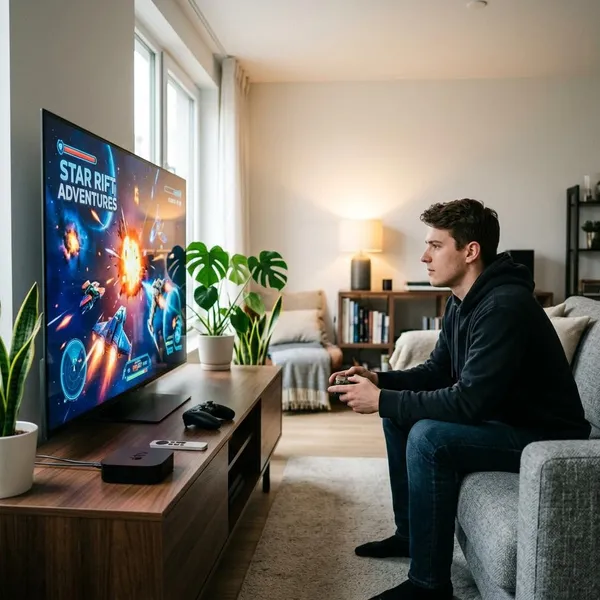
It runs Apple Arcade and App Store games
Apple TV 4K runs Apple Arcade titles and supported App Store games, so it can handle plenty of approachable TV-friendly gaming. Before relying on it, check the specific titles you care about, because not every game available on iPhone or iPad is equally useful on a television.
It supports PlayStation and Xbox controllers
Support for many PlayStation and Xbox controllers is one of the best reasons to try Apple TV 4K gaming. A proper controller makes the experience feel much closer to a console, especially for racing, platform, adventure, and action games.
It works well for casual and family gaming
This is where Apple TV 4K makes the most sense: occasional play, younger players, mixed-skill households, and people who do not want gaming to become a complicated hobby. Apple Arcade's no-ads, no-included-in-app-purchases model can also be easier to manage for children than many standard mobile games.
- Good situation: a household that streams most nights and plays games once in a while.
- Good situation: parents who want simple games without constant purchase prompts.
- Less ideal: someone buying a device mainly for long competitive sessions.
Its game library is smaller than dedicated consoles
The smaller library is the main reason Apple TV 4K should not be oversold as a full console replacement. It can be fun and convenient, but it does not match the release depth, exclusives, accessories, or gaming community of PlayStation, Xbox, or Nintendo Switch.
If you are choosing between Apple TV 4K and a console, start with a short list of five games you definitely want to play. If most are not available or do not play well on Apple TV, that answers the question faster than comparing hardware features.
Conclusion
Apple does not have a dedicated gaming console today, and the Apple Pippin shows why entering that market is harder than simply building hardware. For casual living-room play, Apple TV 4K with Apple Arcade and a controller can be a sensible low-effort setup, especially if your household already uses Apple devices. For anyone who cares most about big releases, exclusives, and long-term gaming depth, a dedicated console is still the safer choice.