If you want to try Atari retro console games today, start with the type of play you actually enjoy: quick score chasing, local multiplayer, simple action, or early exploration. The best Atari games are usually easy to learn in under a minute, but the right choice depends on whether you want a five-minute solo run, a couch competition game, or the most authentic hardware experience.
Best Atari Games by Play Style
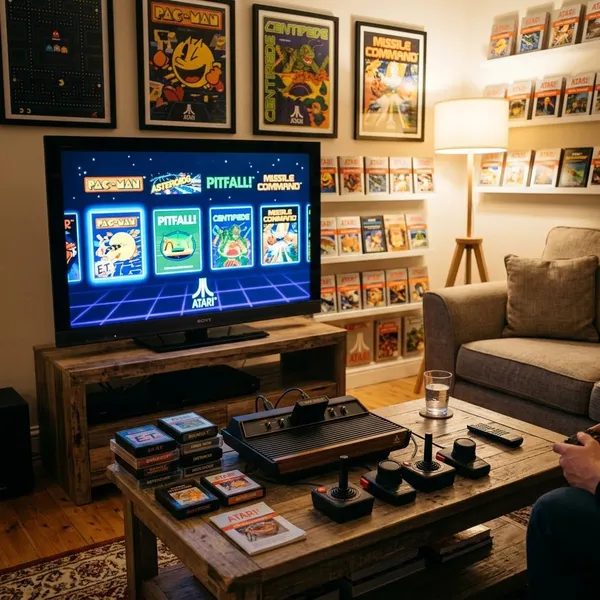
The Atari library is easier to enjoy when you choose by mood instead of trying to find one "best" game. A beginner who wants instant fun may prefer Breakout or Combat, while someone curious about early adventure design will get more from Adventure or Pitfall!.
Adventure and Pitfall! for exploration
Adventure is the stronger historical starting point because it turns simple blocks and rooms into a small connected world. You collect objects, learn routes, avoid threats, and slowly understand how the map works. It is primitive visually, but it still gives the satisfying feeling of solving a place rather than just surviving a screen.
Pitfall! is better if you want exploration with more movement and timing. The jungle screens, vines, hazards, and repeated attempts make it feel closer to an action platformer. Choose Adventure for curiosity and map learning; choose Pitfall! if you want a more physical challenge.
Asteroids and Centipede for high scores
For score chasing, Asteroids and Centipede are still easy recommendations. Asteroids rewards control and patience because your ship keeps drifting, so careless movement can be as dangerous as the rocks themselves. Centipede feels busier and more reactive, with enemies pushing you to manage space instead of only aiming well.
Combat and Warlords for multiplayer
Combat is one of the easiest Atari games to put in front of another person. Tank movement, aiming, and dodging make sense quickly, and the different variations keep rematches from feeling identical.
Warlords works especially well when the goal is a louder, more social game. Everyone understands the basic idea of defending a corner and breaking through the others, but the bouncing ball creates enough chaos to make close rounds funny. For a family night or a small retro setup with friends, these two are more useful than many technically impressive single-player titles.
Missile Command and Yars' Revenge for action
Missile Command is the cleaner action choice for beginners: defend your cities, choose which threats matter first, and try not to panic when the screen fills up. The game is tense because every shot is a small decision, not just a reflex.
Yars' Revenge is stranger and more distinctive. It takes a little longer to understand, but it has a rhythm that feels unlike the obvious arcade conversions. Try Missile Command first if you want immediate pressure; try Yars' Revenge when you want an Atari game with more personality.
Breakout and Super Breakout for quick sessions
Breakout is ideal when you only want a few minutes of play. Move the paddle, keep the ball alive, clear bricks, restart when you fail. That direct loop is why it still works for casual players, children, and anyone who does not want rules explained.
Super Breakout adds useful variation without making the idea complicated. If you are building a small starter list, one brick-breaking game belongs on it because it shows Atari at its most immediate.
Why the Atari 2600 Matters
The Atari 2600 matters because it helped make home video games feel like an ongoing hobby rather than a fixed toy. You could keep the console, buy new cartridges, compete with people at home, and play versions of arcade-style games without going out.
The VCS became the Atari 2600
The Atari VCS and Atari 2600 usually refer to the same core console. It launched as the Atari Video Computer System, then later became known as the Atari 2600 as Atari's product line expanded.
Cartridges made the game library expandable
Cartridges were the practical breakthrough. Instead of buying a machine with only built-in games, a household could add a new title later and make the same console feel fresh again.
That changed how people treated the system. A racing game, a shooter, a multiplayer game, and an adventure title could all live on the same hardware. For modern players, that is normal; for early home consoles, it helped set the pattern.
Arcade hits reached home players
Atari's home versions of games such as Asteroids, Centipede, and Missile Command were not identical to arcade cabinets, but they brought recognizable arcade ideas into the living room. That was a big deal when the alternative was spending coins somewhere else.
Simple games encouraged replay and competition
Many Atari 2600 games restart quickly and explain themselves through failure. You lose, you understand why, and you try again. That makes them good for personal score chasing and for taking turns with someone nearby.
Atari Games Beyond the 2600
The 2600 is the obvious starting point, but Atari's later systems are worth knowing if you want the broader retro picture. They are not all equally easy to recommend, and that distinction matters before you spend money on hardware or cartridges.
Atari 5200
The Atari 5200 aimed for a more advanced home arcade experience, with better audiovisual capability than the 2600. Its reputation is mixed, largely because the controller experience can be a sticking point for many players.
That makes it more of an enthusiast system than a casual first purchase. If you are curious about Atari history, it is interesting; if you just want the easiest way to enjoy classic games, start elsewhere.
Atari 7800
The Atari 7800 is one of the more practical later Atari consoles to research because it connects newer hardware with much of the 2600 library. Backward compatibility gives it a stronger everyday argument than some other Atari systems.
For a collector who wants one setup with access to older favorites and later Atari titles, the 7800 can make sense. A casual player may still be happier with a modern collection, but the 7800 is a reasonable bridge between eras.
Atari Lynx
The Atari Lynx showed a more ambitious side of Atari, especially as a color handheld. It is appealing if you like portable hardware history and want something beyond the usual home-console story.
The trade-off is convenience. Original handheld collecting can involve screen condition, battery needs, game availability, and price. Treat the Lynx as a specialist interest rather than the simplest way into Atari games.
Atari Jaguar
The Atari Jaguar is fascinating because it represents Atari's final major console push, but it is not the friendliest beginner platform. Its reputation is tied as much to ambition and uneven execution as to the games themselves.
If you are buying mainly to play well-known Atari classics, look to the 2600, 7800, or modern options first. The Jaguar is better for collectors who enjoy the story of unusual hardware and the final chapter of Atari as a major console maker.
How to Play Atari Games Today
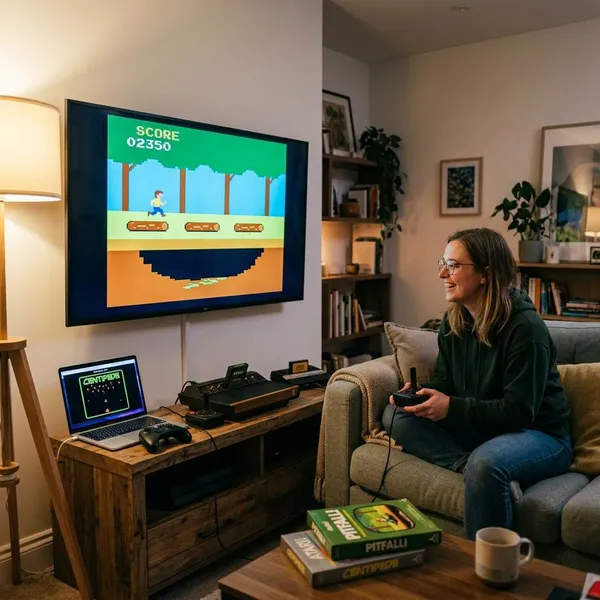
The best way to play Atari games today depends on what you value most: original feel, low-effort setup, a large library, or portability. Decide that first, because it will save you from buying hardware that looks exciting but does not fit your actual habits.
| Best fit | Choose this option | Watch out for |
|---|---|---|
| Collectors and nostalgia-focused players | Original Atari hardware | Old cables, worn controllers, TV compatibility, cartridge condition |
| Cartridge play with less hassle | Atari 2600+ | Checking cartridge compatibility before buying specific games |
| Beginners who want many games fast | Atari 50 | Less physical collecting feel |
| Short sessions away from a TV | Atari Gamestation Go | Different feel from original console play |
Why Atari Retro Games Still Hold Up
Atari retro games still hold up because their best ideas are immediate. They do not need long onboarding, complex menus, or hours of commitment. You understand the goal quickly, then the game asks whether you can do a little better than last time.
Simple rules make them easy to learn
Most good Atari games can be explained with one sentence: clear the bricks, defend the cities, shoot the asteroids, beat the other player. That makes them easy to share with someone who does not usually play games.
The depth usually comes from timing and consistency, not from extra systems. A new player can enjoy the first round, while a better player can still chase cleaner movement, safer decisions, or a higher score.
Short sessions encourage replay
Short sessions are a real advantage now. If you have ten minutes before dinner, a quick Breakout or Asteroids run feels complete instead of interrupted.
High scores add lasting challenge
High scores give simple games a reason to last. The target is not finishing a campaign; it is surviving longer, reacting better, and proving that the next run can be cleaner than the last one.
- Solo players can treat the score as a personal benchmark.
- Families can keep informal house records.
- Retro hobbyists can compare versions across hardware or collections.
Local multiplayer keeps classic games social
Local multiplayer is one of Atari's biggest modern strengths. Games like Combat and Warlords do not need accounts, online lobbies, or long explanations. You hand over a controller and start.
That makes them unusually good for casual gatherings. The graphics may be old, but the social tension of a close match still works because the other player is right there in the room.
Conclusion
The smartest way to enjoy Atari today is to pick a few games by play style, then choose the hardware around your habits rather than nostalgia alone. Start with accessible titles like Breakout, Asteroids, Combat, or Adventure, and use a modern collection if you want the least friction. Original hardware is still special, but the best Atari experience is the one you will actually set up, play, and return to.