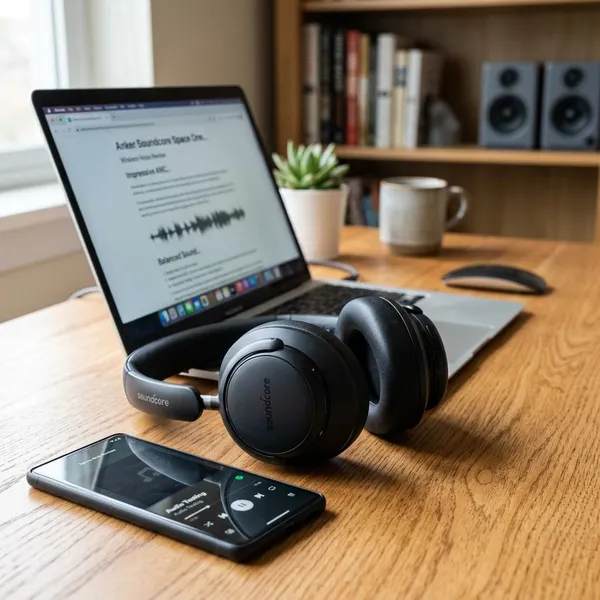
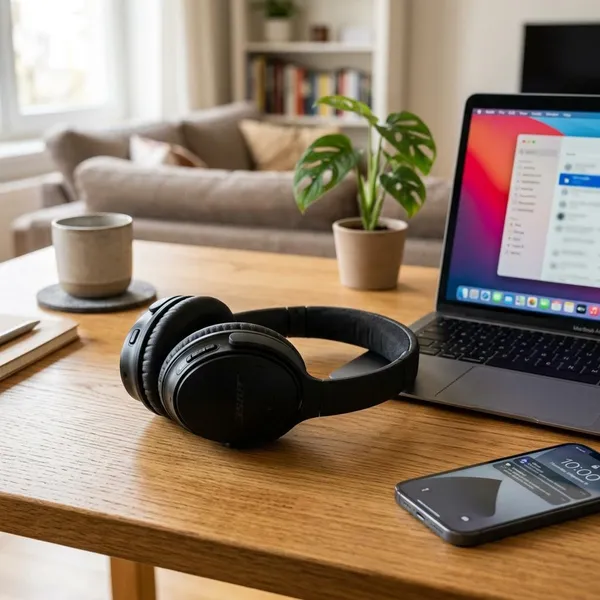
The best Bose headphones for you depend less on the logo and more on where you listen most. If you travel often, start with QuietComfort Ultra; if you want the most sensible everyday buy, start with the standard QuietComfort; if you need something pocketable or more aware outdoors, look at Bose's earbud options instead.
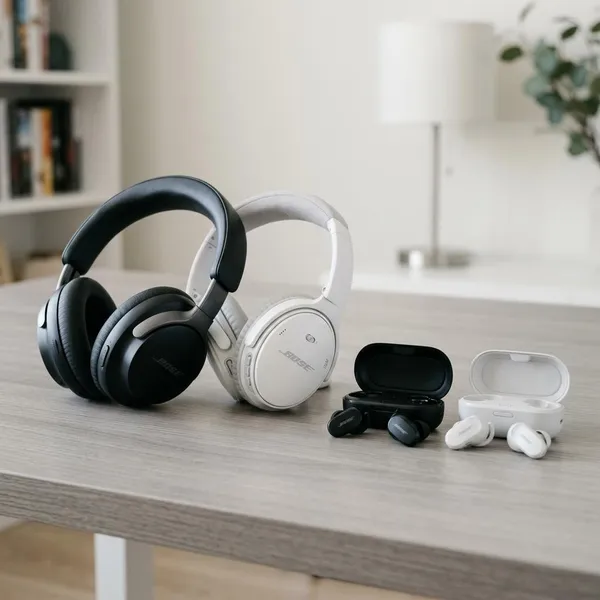
Bose Headphones Compared
Bose is strongest when comfort, noise cancellation, and easy daily use matter more than extreme audio tweaking. The first thing to decide is your main listening situation: long trips, office focus, quick commuting, outdoor awareness, or mixed home use.
Price and overall value
For most buyers, value starts with the standard Bose QuietComfort Headphones. They usually deliver the core Bose experience—comfortable fit, strong ANC, simple controls, and dependable sound—without making you pay for every flagship extra.
- Best value: QuietComfort for everyday listening, commuting, and desk work.
- Best premium pick: QuietComfort Ultra for regular travel and stronger isolation.
- Best compact choice: QuietComfort Ultra Earbuds when bag space matters.
- Best awareness choice: Ultra Open Earbuds for walks, errands, and staying alert.
Noise cancellation and awareness
Bose's closed over-ear models are the ones to choose when blocking noise is the priority. QuietComfort Ultra is the stronger option for steady low-frequency noise such as airplane cabin rumble, while the standard QuietComfort is already enough for many offices, homes, and daily commutes.
Awareness is a separate need, not a weaker version of ANC. If you walk near traffic, listen while cooking, or want to hear coworkers and family without removing earbuds, Ultra Open Earbuds make more sense than sealed noise-cancelling earbuds.
Comfort and portability
Over-ear Bose headphones are usually the better pick for long sessions because the pressure is spread around the ear instead of sitting inside the ear canal. That matters on a three-hour flight, a full workday, or a long study session.
| Listening habit | Better Bose format | Why it fits |
|---|---|---|
| Several hours at a desk | Over-ear QuietComfort models | More cushioned and less intrusive over time |
| Short commutes and errands | QuietComfort Ultra Earbuds | Easier to carry and quick to put away |
| Outdoor walks or shared spaces | Ultra Open Earbuds | Keeps outside sound naturally audible |
Sound and immersive audio
Bose sound is usually easy to live with: polished, smooth, and suitable for podcasts, pop, video, and everyday playlists. It is not the brand to choose if you want the most detailed manual EQ controls or a highly analytical sound.
Immersive Audio on the Ultra line is worth considering if you watch movies, stream live performances, or enjoy a wider presentation. If you mostly listen to podcasts, background music, or standard playlists while working, it may be a nice extra rather than a buying reason.
Battery life and charging
Battery life should be judged by your routine, not only by the number on a spec sheet. Over-ear models are easier for long travel days because you are less dependent on a charging case, while earbuds work well for shorter sessions spread throughout the day.
Before buying, check two practical things: whether the model uses the same charging cable as your other devices, and whether a quick top-up fits your habits. That matters more in daily life than a small difference in quoted battery hours.
Calls and connectivity
Bose models are generally convenient for calls, especially if you switch between a laptop and phone. Multipoint support is useful for workdays because you can move from a video meeting to a phone call without constantly reconnecting.
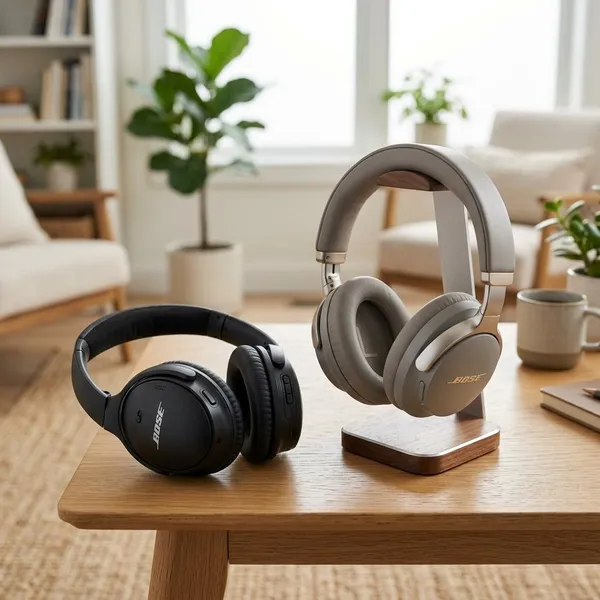
Bose QuietComfort Ultra 2nd Gen vs QuietComfort
This is the main decision for most people comparing Bose over-ear headphones. QuietComfort Ultra is the more premium choice; QuietComfort is the easier recommendation when you want the Bose basics done well for less money.
Ultra offers stronger noise cancellation
QuietComfort Ultra is the better pick if noise reduction is the reason you are buying Bose in the first place. It is the model I would look at first for frequent flights, long train rides, or a noisy shared workspace where background rumble wears you down.
The standard QuietComfort is not weak, though. For lighter office noise, home use, and normal commuting, it will often feel close enough that the price difference matters more than the ANC gap.
Ultra adds immersive audio
Immersive Audio gives the Ultra model a wider, more spacious feel. It can make films, live music, and some playlists more engaging, but it is not something every listener will use every day.
Ultra supports USB-C audio
USB-C audio is a useful extra if you like having a wired digital option for compatible devices. It is especially handy at a desk, on a plane, or when you want a more stable connection than Bluetooth.
This should not be the only reason to buy the Ultra, but it can tip the decision if your routine includes laptops, tablets, or travel setups where one cable keeps things simpler.
QuietComfort has simpler controls
The standard QuietComfort can feel easier to use because the controls are more straightforward. That matters if you adjust volume, pause music, or answer calls while walking, commuting, or working without wanting to think about gestures.
QuietComfort offers better value
QuietComfort is the better value choice for many people because it keeps the parts most users notice: comfort, good ANC, enjoyable sound, and easy daily handling. If you are buying one pair for work, commuting, and home listening, this is usually the safer place to start.
The Ultra becomes easier to justify when the upgrades solve a real problem for you. If stronger noise cancellation will make weekly travel less tiring, paying more is different from paying more just to own the flagship.
Both provide long-wear comfort
Comfort is one of the reasons this comparison is not as risky as it looks. Both models are designed for longer listening sessions, and both are better choices than earbuds if you dislike ear-tip pressure or wear headphones for hours at a time.
If you wear glasses, take short breaks when testing fit at home and notice pressure around the temples. Specs will not tell you that part; your own two-hour comfort test will.
Which Bose Headphones Fit Your Needs?
The easiest way to choose is to match the model to the situation you face most often. Do not buy the strongest ANC if you mainly need awareness outside, and do not buy tiny earbuds if you really want all-day comfort at a desk.
Choose QuietComfort Ultra for premium travel
Choose QuietComfort Ultra if your main problem is noise fatigue. A person flying twice a month or working regularly in loud public places will feel the benefit more than someone using headphones mostly in a quiet bedroom.
It is also the better choice if you want Bose's fuller feature set in one over-ear model: stronger ANC, immersive audio, and extra connection flexibility. The mistake to avoid is paying for Ultra features when your daily routine will not really use them.
Choose QuietComfort for everyday value
QuietComfort is the practical pick for normal life: commuting, office work, streaming shows, phone calls, and evening listening at home. It gives you the Bose feel without turning the purchase into a flagship splurge.
Choose QuietComfort Ultra Earbuds for compact ANC
QuietComfort Ultra Earbuds fit the person who wants serious noise cancellation but does not want to carry full-size headphones. They are especially useful for commuters, light packers, and anyone who moves between places throughout the day.
They are less ideal if you regularly listen for several hours without breaks. In that case, over-ear Bose models may be more comfortable even if they take up more room in your bag.
Choose Ultra Open Earbuds for awareness
Ultra Open Earbuds are for situations where hearing the world is part of the point. Think outdoor walks, errands, casual office use, or listening around family at home.
Do not choose them as your main travel-noise solution. Their open design is the benefit and the limitation: you gain awareness, but you give up the sealed-off feeling that traditional ANC earbuds and over-ear headphones provide.
Choose over-ear Bose models for longer sessions
For long sessions, over-ear Bose models are usually the safer choice. The fit is more relaxed for many listeners, the battery setup is simpler for travel days, and the sound feels more enveloping than open or compact earbuds.
- Check your main environment first: planes and loud offices point toward Ultra; normal work and home use point toward QuietComfort.
- Choose the format next: over-ear for long comfort, earbuds for portability, open earbuds for awareness.
- Pay only for features you will use: immersive audio, USB-C audio, and top ANC are valuable only when they match your routine.
Conclusion
If I were choosing for most people, I would start with the standard QuietComfort and only move up to QuietComfort Ultra when travel, stronger ANC, or immersive audio clearly matters. Bose's earbuds are better when portability or awareness is the deciding factor, but for long listening sessions, the over-ear models remain the most comfortable bet.