The best camera for beginners is usually not the most powerful one; it is the one you will actually carry, understand, and keep using. For most new photographers, the Canon EOS R50 is the safest all-around choice, while the Sony a6100, Fujifilm X-M5, OM-D E-M10 Mark IV, Nikon Z50II, Canon EOS R100, and Nikon D3500 each make more sense for specific needs.
Best Beginner Cameras to Buy
Start with your main use, then choose the body around that. A camera for family photos needs easy autofocus and simple controls; a camera for YouTube needs better video handling; a camera for travel should stay light once the lens is attached.
Canon EOS R50 for easy hybrid shooting
The Canon EOS R50 is the easiest pick for most beginners because it handles photos and casual video without making the controls feel intimidating. It is light, responsive, and friendly enough for full auto, but it still gives you room to move into aperture priority, shutter priority, and manual settings later.
Its strongest everyday advantage is autofocus. If you are photographing people, pets, family events, or holidays, reliable face and subject tracking will save more shots than a slightly higher-spec sensor or a long list of advanced features.
Canon EOS R100 for learning photography
The Canon EOS R100 makes sense if you want a modern mirrorless camera at a lower price and do not need strong video tools or fast action performance. It is best for daylight travel, family snapshots, school events, and learning the basics of exposure and composition.
Fujifilm X-M5 for content creation
The Fujifilm X-M5 is a good fit for beginners who want stills and short-form video in one compact camera. Fuji's color profiles and film simulations are useful if you want attractive photos and clips without spending a lot of time editing.
This is especially appealing for a creator who films reels, food, products, city walks, or talking-head clips. The tradeoff is cost: Fujifilm lenses and bodies can push the total kit price higher than a basic Canon setup, so it is worth choosing only if the creative workflow matters to you.
Sony a6100 for moving subjects
The Sony a6100 is the beginner camera I would look at first for kids, pets, and unpredictable movement. Its autofocus is the reason to buy it: more sharp photos means less frustration while you are still learning timing, shutter speed, and focus modes.
Nikon Z50II for advanced features
The Nikon Z50II is better for a beginner who already knows the hobby will last. It costs more than the most basic starter cameras, but the handling, controls, and performance give you more space to grow before you feel limited.
It is a sensible step up for outdoor action, sports practice, wildlife attempts, or anyone who wants a camera that feels less entry-level from day one. If you only want casual photos on holidays, it may be more camera than you need.
OM-D E-M10 Mark IV for compact carry
The OM-D E-M10 Mark IV is the practical choice when size matters most. The Micro Four Thirds system keeps lenses small, so the full kit is easier to bring on city breaks, walks, and long travel days.
Its in-body stabilization is useful for handheld shooting, especially in dim restaurants, museums, or evening streets where a beginner may not want to carry a tripod. It is not the strongest option for heavy cropping or serious sports, but it is one of the easiest cameras to live with.
Nikon D3500 for low-cost DSLR photography
The Nikon D3500 is still worth considering used if your priority is learning photography cheaply. It has an optical viewfinder, excellent battery life, simple controls, and enough image quality for real learning.
The limit is clear: it feels dated for video and its autofocus cannot match newer mirrorless cameras. For a student or budget-conscious learner who mainly wants still photos, though, a clean used D3500 with a kit lens can be a very smart first setup.
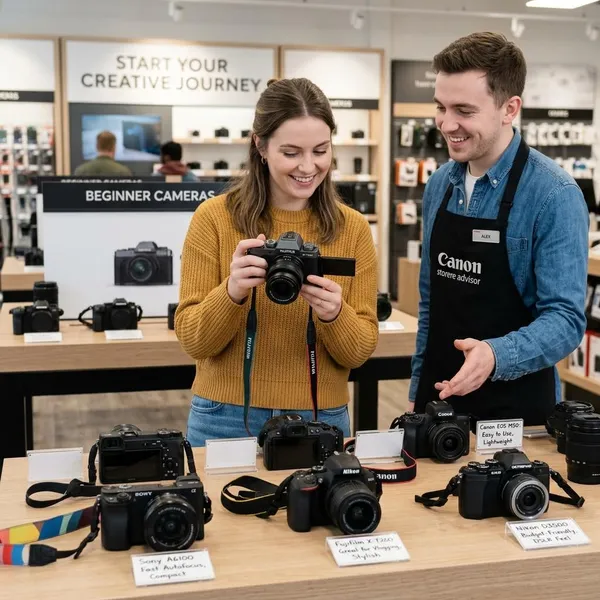
Which Beginner Camera Fits Your Needs?
Once the shortlist looks good on paper, match the camera to the situation you shoot most often. Do not buy for the one rare trip or occasional school sports day if 90% of your photos are family life, travel, or casual weekends.
Canon EOS R50 for family photos
For family use, the Canon EOS R50 is the most balanced choice because it makes quick people photos easier. Birthday parties, holidays, living-room portraits, and casual outings usually involve mixed light and moving subjects, so dependable autofocus matters more than advanced manual controls.
Sony a6100 for kids and pets
Choose the Sony a6100 if your main subjects rarely sit still. A child running toward you or a dog moving indoors is a harder test than a landscape or posed portrait, and the a6100 gives beginners a better chance of getting sharp results.
OM-D E-M10 Mark IV for travel
The OM-D E-M10 Mark IV is strongest for the traveler who values a small bag over maximum sensor size. A compact body with compact lenses is easier to carry through airports, markets, museums, and long walking days.
Fujifilm X-M5 for YouTube and reels
The Fujifilm X-M5 fits beginners who want photos, short clips, and a strong visual style without a complicated editing routine. It is a better match for reels, casual YouTube, product clips, and lifestyle content than for someone who only wants simple family snapshots.
- Look for: a flip-friendly screen setup, reliable video autofocus, and easy file transfer.
- Avoid overspending: if you will mostly shoot still photos, a simpler camera may be better value.
Nikon Z50II for sports and wildlife
The Nikon Z50II is the more serious beginner option for sports fields, outdoor action, and wildlife. These subjects ask more from autofocus, handling, and lenses, so buying the cheapest body often leads to frustration.
Canon EOS R100 for casual photography
The Canon EOS R100 is best for casual photography where the subjects are not too demanding. Vacations, family snapshots, simple portraits, and everyday scenes are exactly the kind of use where it can feel like a big upgrade from a phone without forcing a large budget.
Nikon D3500 for learning manual controls
The Nikon D3500 is a good teacher because it keeps photography fairly simple. You see the relationship between aperture, shutter speed, ISO, and the optical viewfinder experience without too many modern aids getting in the way.
It suits a learner who wants to slow down and understand still photography. It does not suit someone who mainly wants video, silent shooting, or the convenience of modern subject tracking.
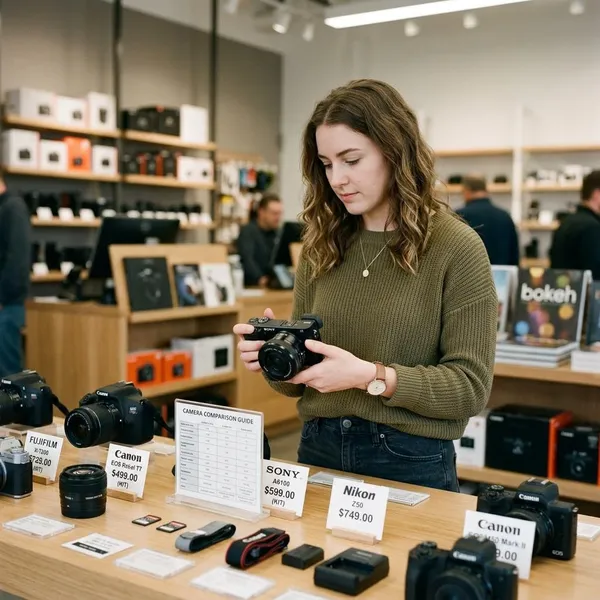
How Much Should a Beginner Spend?
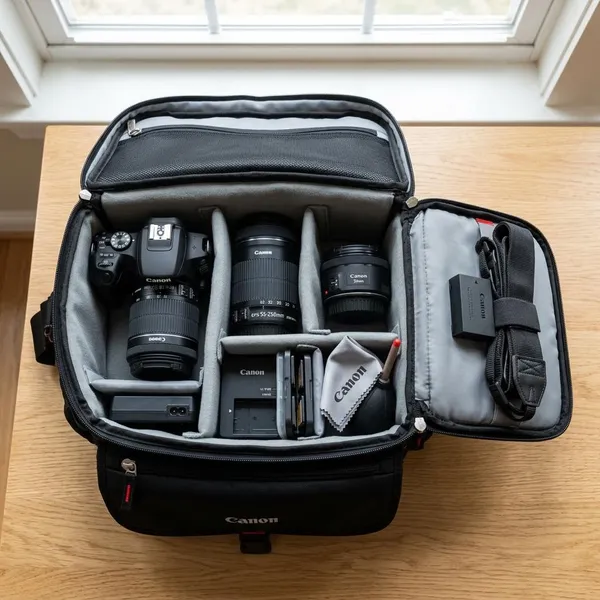
Most beginners should plan around $500 to $1,200 including a lens, memory card, spare battery, and a basic way to carry the camera. Spending less can work well if you buy used; spending more only makes sense when you already have a specific need, such as sports, wildlife, or serious video.
| Budget range | Best fit | Watch out for |
|---|---|---|
| Under $500 | Used DSLR or basic starter camera | Weak video, older autofocus, worn used gear |
| $500 to $800 | Most first-time buyers | Bundles with cheap accessories you do not need |
| $800 to $1,200 | Longer-term hobby use | Buying a better body but leaving no lens budget |
| Over $1,200 | Specific video, sports, or wildlife needs | Paying for features before you know you need them |
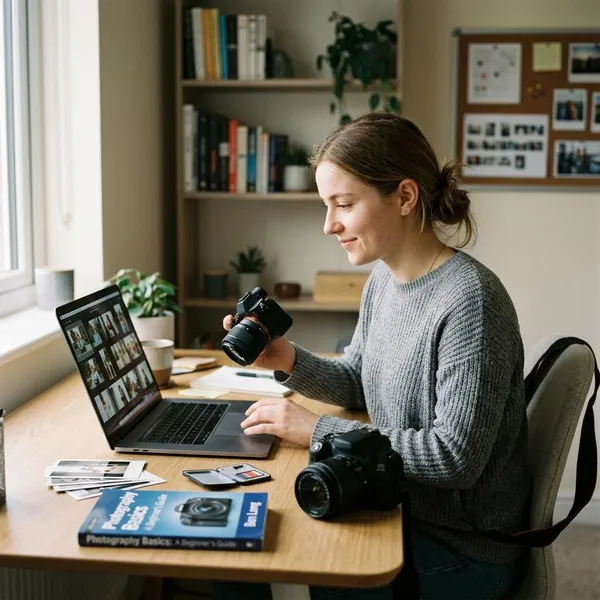
Under $500 for used or basic cameras
Under $500, look at used cameras first. A Nikon D3500 kit, an older mirrorless body, or a basic new model can be enough if your goal is still photography and learning fundamentals.
Check the camera condition, included lens, battery health, charger, sensor cleanliness, and return policy. A cheap camera is only a good deal if it works reliably and comes with the basics you need to start shooting.
$500 to $800 for a solid starter kit
This is the best range for many beginners because it can cover a modern mirrorless body with a kit lens. The Canon EOS R50, Canon EOS R100, and Sony a6100 often make the most sense here depending on sales, bundles, and whether you buy new or used.
- Best value: camera plus kit lens, memory card, and spare battery.
- Best upgrade path: a system with affordable lenses you may actually buy later.
- Common mistake: choosing the cheapest bundle because it includes many low-quality extras.
$800 to $1,200 for better long-term value
Spend in this range if you expect photography or video to become a regular hobby. A better body, nicer controls, stronger autofocus, or a more useful lens can delay the need to upgrade.
Over $1,200 for specialist needs
Over $1,200 is not automatically wrong, but it should be intentional. Stronger video tools, weather-resistant setups, faster action performance, or a specific lens combination can justify the spend.
Conclusion
Pick the camera that removes the biggest obstacle between you and regular practice: the Canon EOS R50 for the safest all-around start, the Sony a6100 for movement, the Fujifilm X-M5 for content, the OM-D E-M10 Mark IV for travel, the Nikon Z50II for more serious action, the Canon EOS R100 for casual value, or the Nikon D3500 for low-cost learning. If you are unsure, buy a simple kit lens setup, keep some budget for essentials, and let your next lens purchase follow what you actually enjoy shooting.