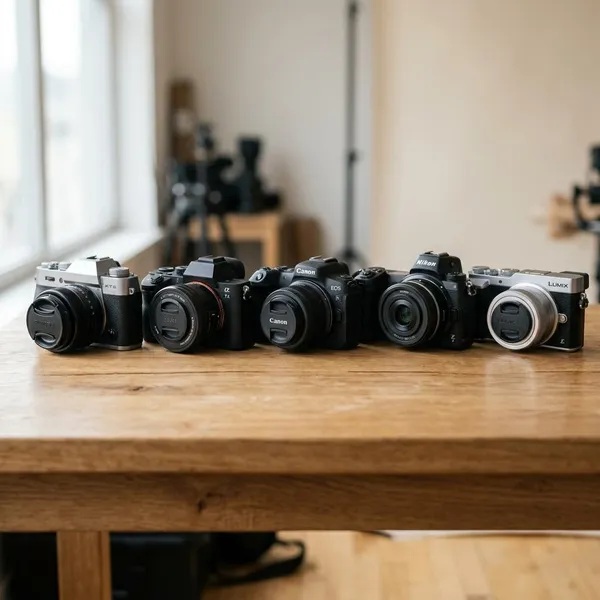
The best camera is the one that fits what you shoot most often, not the one with the longest spec sheet. For most people, that means choosing between an easy beginner body, a stronger hybrid camera, a professional workhorse, or a compact fixed-lens camera you will actually carry.
Best cameras for beginners and smaller budgets
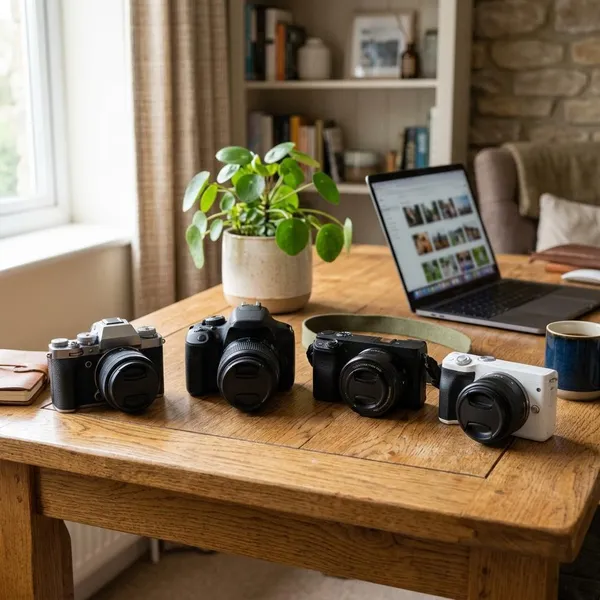
Beginner buyers should check three things first: autofocus that can keep up with people and pets, controls that do not feel intimidating, and a lens system that will not become too expensive once you move beyond the kit lens. A cheap body can be a poor deal if the next useful lens costs more than expected.
Canon EOS R50
The Canon EOS R50 is the safest beginner pick here for most people. It is small, friendly to use, and strong enough for both photos and casual video, especially if your subjects are children, pets, friends, or moving family moments.
Its autofocus is the main reason to choose it over the cheaper R100. The flip screen also helps if you record yourself, take group shots, or want a camera that feels natural for social content. The main caution is Canon's still-growing RF-S lens range, so price the lens you may want next before buying.
Canon EOS R100
The Canon EOS R100 is best for buyers who want the lowest practical entry into Canon mirrorless and do not need advanced video, fast action shooting, or lots of direct controls. It can produce very good daylight photos, but it feels more basic than the R50, so it is better for slow, simple photography than for growing quickly into action, wildlife, or serious hybrid work.
Nikon Z50II
The Nikon Z50II is a better fit if comfort and handling matter as much as price. The grip, controls, and overall feel make it easier to use for longer periods, which matters on a day trip or during a family event when a tiny camera can become annoying after an hour.
Choose it if you want a beginner-friendly camera that does not feel too stripped down. It may not always be the cheapest option, but it is a smart choice for someone who wants to learn properly and keep the same body for several years.
- Choose the R50 if you want the easiest all-round beginner camera.
- Choose the R100 if the budget is tight and your needs are simple.
- Choose the Z50II if grip, controls, and learning comfort matter most.
Best cameras for enthusiasts and hybrid shooters
Enthusiasts usually need a camera that can do more than one job well. Maybe you shoot portraits on weekends, record travel videos, photograph your kids indoors, and occasionally take on a small paid project. In that case, autofocus, lens choice, stabilization, and video reliability matter more than one headline specification.
Sony a7 V
The Sony a7 V is the strongest choice here if you want one premium full-frame body for serious photography and video. It is especially appealing for hybrid shooters who move between portraits, events, travel, interviews, and fast everyday subjects.
Sony's biggest practical advantage is the system around the camera. The lens selection is deep, third-party support is strong, and there are options at many price levels. The downside is obvious: once you add good full-frame lenses, this becomes a serious investment rather than a casual upgrade.
Nikon Z5II
The Nikon Z5II is a sensible full-frame step-up camera for people who care more about still photography than extreme speed. It suits portraits, low-light scenes, travel, and general enthusiast use where image quality and comfortable handling matter more than flagship video features.
It is a good option if you want full-frame files without paying professional-body prices. Just remember that full-frame lenses are usually larger and more expensive, so the real question is not only whether you can afford the body, but whether you want to carry the full kit.
Fujifilm X-T5
The Fujifilm X-T5 is the camera to consider if you want high-quality stills in a smaller APS-C system. It makes the most sense for travel, street photography, documentary work, and photographers who enjoy physical controls rather than touchscreen-heavy operation.
Its strength is not just image quality. The shooting experience is part of the appeal: dials, film simulations, and compact lenses can make it easier to enjoy photography often. It is less ideal if your main priority is full-frame depth of field or the most advanced video workflow, but for stills-first enthusiasts it remains one of the most satisfying choices.
- For daily hybrid use: the Sony a7 V is the most complete, but also the costliest.
- For full-frame value: the Nikon Z5II gives room to grow without going straight to pro pricing.
- For travel and stills enjoyment: the Fujifilm X-T5 keeps quality high while staying easier to carry.
Best cameras for demanding professional work
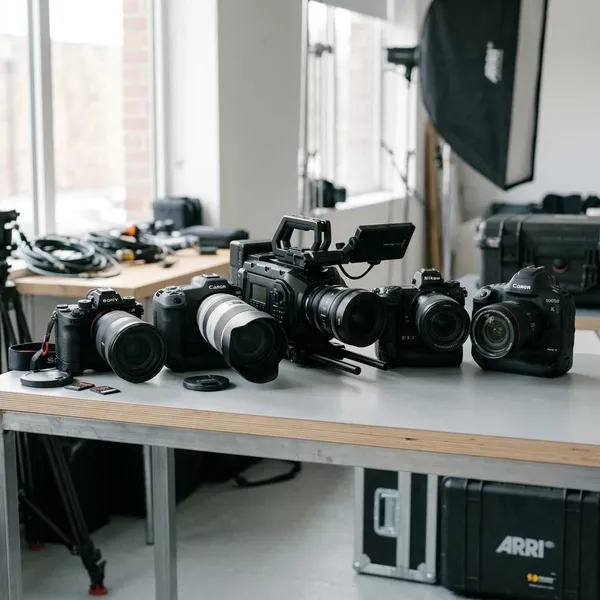
Professional cameras are not about owning the most impressive body. They are about getting dependable results when missed focus, slow handling, overheating, poor battery planning, or weak backup options can cost money. Before buying at this level, think about the full working kit: lenses, cards, batteries, backup body, service support, and file workflow.
Canon EOS R5 Mark II
The Canon EOS R5 Mark II is aimed at professionals who need high resolution, strong autofocus, and serious hybrid features in one body. It fits weddings, editorial assignments, commercial work, and creators who need both polished stills and capable video from the same camera.
The reason to pay for this level is not just sharper files. It is confidence under pressure: better subject tracking, more cropping flexibility, and a body designed for demanding use. The warning is total system cost, because premium Canon RF lenses can quickly turn the body price into only one part of the investment.
Nikon Z8
The Nikon Z8 is a strong professional workhorse for action, events, wildlife, and high-end stills or video work. It gives much of the appeal of a flagship-style camera in a body that is easier to carry than the largest pro designs, which matters if you shoot long days or travel with heavy lenses.
Best compact cameras with fixed lenses
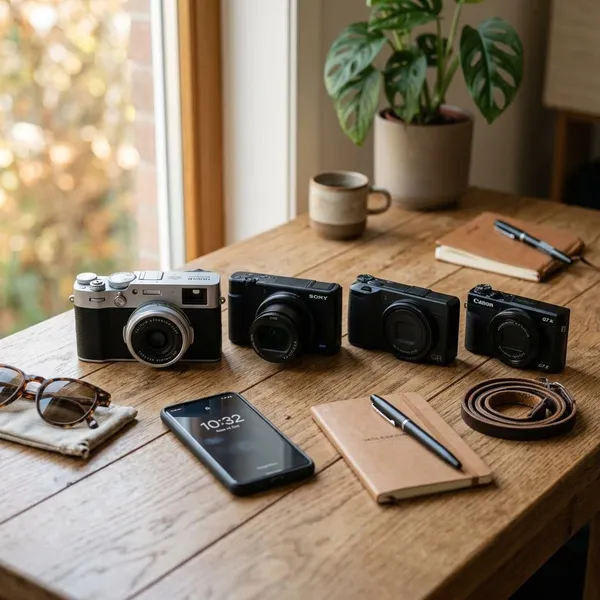
A fixed-lens compact is the right answer when carrying a camera matters more than building a full system. These cameras are especially useful for travel, street photography, daily walks, and people who want better control than a phone without thinking about lenses.
The tradeoff is simple: you must choose the type of lens before you buy. A zoom compact is more flexible for family trips. A fixed prime compact is usually more focused, more intentional, and less forgiving if you cannot move closer or farther away.
Sony RX100 VII
The Sony RX100 VII is the compact to choose when you want maximum flexibility in a tiny body. Its zoom range makes it useful for vacations, family outings, city walks, and situations where you may need a wide shot one minute and a tighter detail the next.
It is not the most comfortable camera for long sessions, and the small sensor has limits in low light compared with larger-sensor cameras. Still, for travel with minimal gear, it is hard to beat the convenience of a pocketable camera with a real zoom and strong autofocus.
Ricoh GR IV
The Ricoh GR IV suits a much more specific photographer: someone who wants a small, fast, large-sensor camera for street, everyday carry, and spontaneous images. It is not a good choice if you need zoom reach for sports, performances, or children across a park, but it can be excellent if you like working with one wide focal length and moving through a scene.
Fujifilm X100VI
The Fujifilm X100VI is for people who want a premium fixed-lens camera that feels enjoyable enough to carry often. The hybrid finder, tactile controls, film simulations, and strong image quality make it especially appealing for travel, street work, and everyday creative photography.
Its fixed lens is both the charm and the limitation. If you already like that field of view, it can feel natural and freeing. If you want to photograph distant subjects, tight portraits, or changing family situations from one spot, a zoom compact or interchangeable-lens camera will be less frustrating.
How to choose the right camera
Start with the problem you need the camera to solve. A parent photographing indoor birthdays, a traveler walking all day, and a creator recording weekly video have different priorities. If you choose for your real routine first, the spec sheet becomes much easier to judge.
Match features to what you shoot
For family, pets, and casual travel, put autofocus, size, and easy sharing ahead of extreme burst rates. For sports and wildlife, subject tracking, lens reach, and fast shooting become much more important. For portraits, lens choice often matters more than buying the newest body.
Budget for lenses and accessories
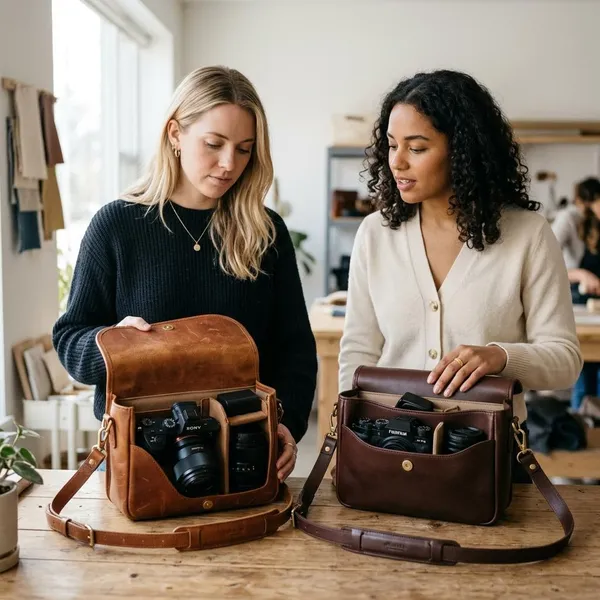
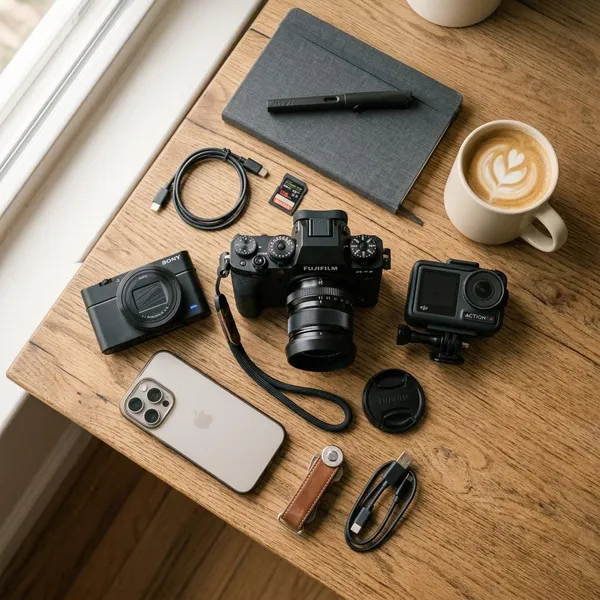
Price the first full kit, not just the camera body. At minimum, include a useful lens, memory card, spare battery, and a comfortable strap or bag. If you know you will want portraits or low-light photos, check the cost of a bright prime lens before committing to a system.
- Body-only bargain: not a bargain if the lenses are too expensive.
- Kit lens bundle: useful for starting, but often not the lens you will keep forever.
- Used previous-generation body: often smart if it leaves money for better glass.
Compare autofocus and stabilization
Autofocus matters most when your subject moves or when you are still learning. Good tracking can save photos of children, pets, events, and travel moments that do not repeat. Stabilization is more useful for handheld low-light shooting and smoother casual video, but it will not freeze a moving subject by itself.
Check video modes and recording limits
If video is occasional, basic 4K, reliable autofocus, and a screen that faces forward may be enough. If you record long interviews, paid content, or regular YouTube videos, look more carefully at heat behavior, microphone support, recording limits, crop factors, and whether the camera stays easy to operate after 30 or 60 minutes.
Try the controls and carrying weight
A camera that feels awkward in your hand is easy to leave at home. If possible, hold your shortlist with a lens attached, not just the body. Check whether the grip feels secure, the menu makes sense, and the full kit is something you would actually carry on a normal day out.
Conclusion
Pick the camera that removes the biggest obstacle between you and the photos or videos you actually want to make. For a beginner, that may be an easy body like the Canon EOS R50; for an enthusiast, it may be a balanced hybrid system; for a traveler, it may be the compact camera that is always with you. Spend enough to get reliability and comfort, but do not drain the lens budget just to own a more impressive body.