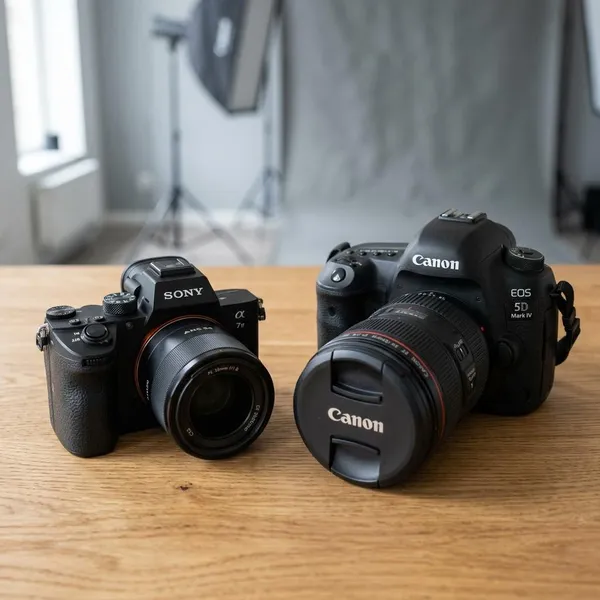
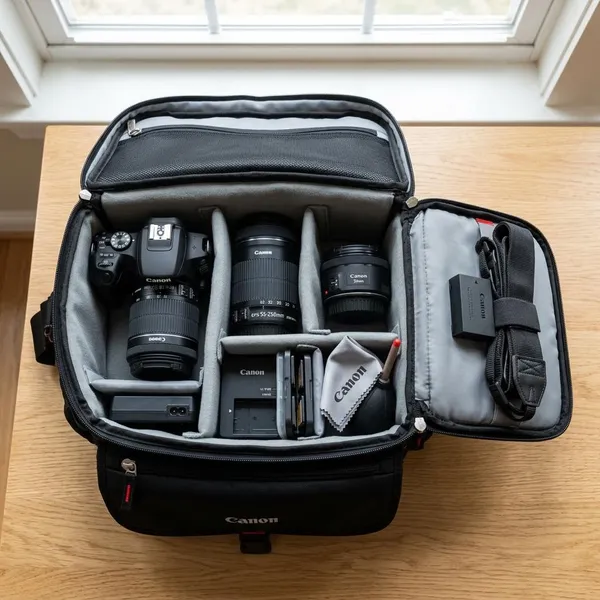
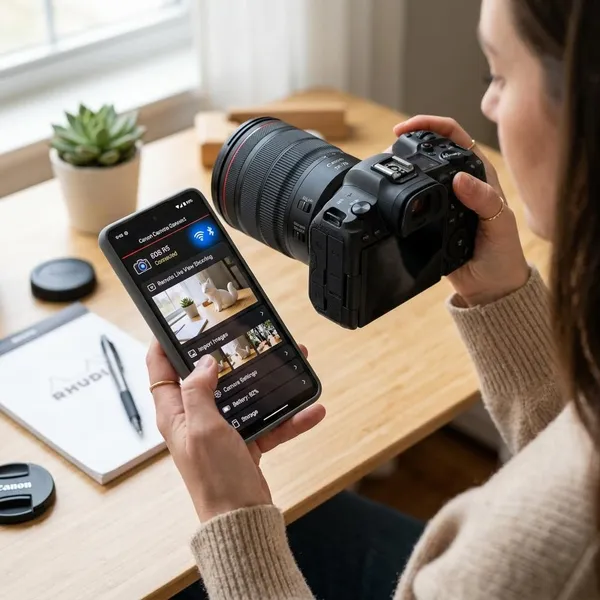
Buying camera gear second hand can be a smart move when the item is easy to inspect, priced honestly, and not mission-critical for paid work. Lenses and simple accessories are usually the safer used buys; camera bodies can save more money, but they need closer checks because shutters, sensors, ports, and electronics all wear. If a listing is vague, rushed, or too cheap compared with similar gear, treat the savings as a warning rather than a bargain.
Is second-hand camera gear worth buying?
Second-hand camera gear is worth buying when the discount matches the risk. A clean used lens from a trusted seller may be a better long-term purchase than a new entry-level lens, while a heavily used camera body with missing accessories can become expensive once you add batteries, chargers, or repairs.
Used lenses can offer strong long-term value
Lenses age more slowly than camera bodies because sharp glass, useful focal lengths, and good build quality stay relevant for years. A used prime or standard zoom with clean glass, smooth rings, accurate autofocus, and a solid mount can be one of the safest ways to improve your kit.
Older camera bodies can save you more
Camera bodies usually drop faster in price, so this is where the biggest savings appear. An older body can still be excellent for portraits, family photos, travel, or web content if the sensor is clean, the shutter count is reasonable for that model, and the controls work without hesitation.
Accessories are often cheaper to buy used
Bags, tripods, lens hoods, brackets, and some grips are easy to buy used because wear is usually visible. Check zippers, locks, clamps, screws, padding, and attachment points rather than worrying about light scuffs.
- Good used accessory bets: bags, plates, hoods, tripod heads, straps, and basic support gear.
- Check more carefully: flashes, chargers, electronic grips, and wireless triggers.
- Price with replacements in mind: old batteries and missing cables can erase the saving.
New or refurbished gear may be safer in some cases
New or refurbished gear makes more sense when reliability matters more than squeezing the budget. If you shoot paid work, rely on advanced video features, or need dependable autofocus every weekend, a warranty and tested condition can be worth the extra cost.
Refurbished gear can be a useful middle ground: cheaper than new, but usually less uncertain than buying from an unknown private seller. Just read the warranty length, return policy, and what "refurbished" actually includes before comparing it with ordinary used listings.
Best places to buy second-hand camera gear
The safest place to buy depends on how much testing you can do yourself. Retailers usually cost more but give you grading, return windows, and clearer support. Peer-to-peer sellers can be cheaper, but you carry more of the inspection risk.
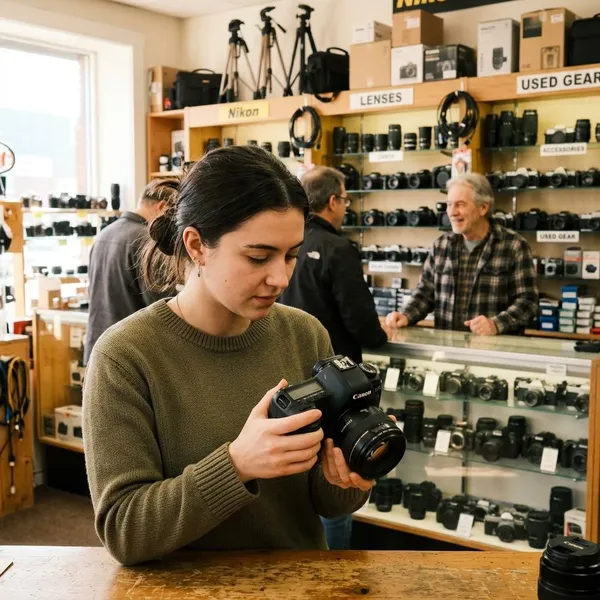
MPB for a large used gear selection
MPB is useful when you want a broad selection and a buying process built around used equipment. The main advantage is being able to compare several copies of the same body or lens by condition and price, instead of guessing from one private listing.
It may not always be the cheapest option, but it is a strong choice if you value individual product photos, condition grades, and a clearer return process.
KEH for dedicated used camera sales
KEH has a long-standing reputation for used camera equipment, especially for buyers who care more about function than perfect cosmetics. A lens with visible exterior wear can still be a good deal if the glass, aperture, autofocus, and mount are sound.
B&H and Adorama for established used departments
B&H and Adorama are good options if you prefer buying used gear from familiar camera retailers. Their used departments can be especially appealing for open-box, demo, or customer-return items where the discount is modest but the buying process feels more predictable.
Their used stock may change quickly, so compare the exact condition, return terms, and included accessories rather than assuming every listing is equally good value.
Local camera stores for in-person inspection
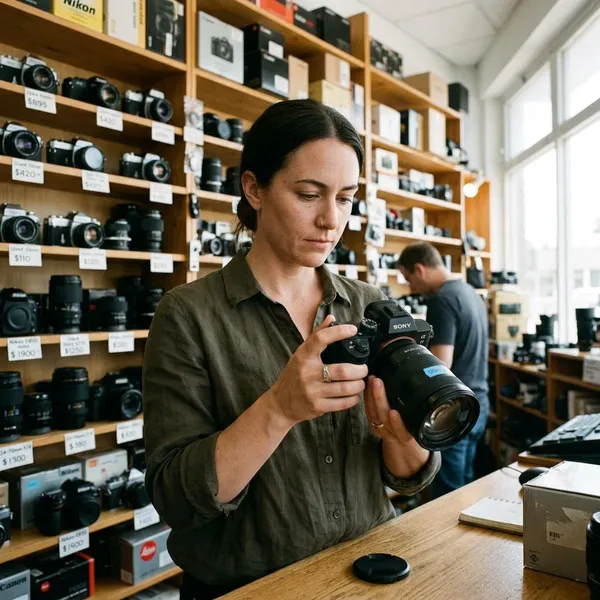
A local camera store can be the best choice when you want to handle the gear before paying. You can mount a lens, test buttons, check the screen, inspect glass under light, and ask staff whether the wear is normal for that model.
Peer-to-peer marketplaces for lower-priced deals
Peer-to-peer marketplaces can produce excellent deals, but they require the most discipline. Use them when you already know the going price and can ask specific questions, not when you are unsure what a good copy should look like.
- Ask for proof: current photos, shutter count for bodies, and close-ups of glass or mounts.
- Test before paying: bring a battery, card, and compatible lens or body for local deals.
- Avoid pressure: rushed sellers, off-platform payment requests, and vague answers are red flags.
- Compare total cost: shipping, tax, missing caps, and replacement batteries can change the deal.
What to check on a used camera body
Start with the parts that can ruin the purchase: shutter use, sensor condition, autofocus behavior, controls, ports, card slots, and included power accessories. Cosmetic wear matters, but a clean-looking body with bad files or an unreliable card slot is still a poor buy.
If you receive the camera by mail, test it the same day while the return window is open. For an in-person sale, do not let the seller rush you through only one quick photo.
Shutter count and overall wear
Shutter count gives a useful hint about use, but it should not decide the purchase alone. Compare the number with the model's expected shutter rating if you can find it, then look for physical clues: worn grips, shiny buttons, scraped baseplates, loose doors, bent strap lugs, or dents near the corners.
Sensor condition and image quality
Take a photo of a plain bright surface at a narrow aperture such as f/16 and check for marks. A few dust spots are common and usually cleanable; scratches, repeated lines, stains, or strange patterns are much more serious.
Also shoot a few normal frames at different ISO settings. Watch for banding, odd color shifts, dead-pixel clusters, or exposure behavior that does not match the scene.
Autofocus and camera controls
Mount a lens you trust and test single-shot autofocus, continuous autofocus, and focus at near and far distances. Then use the camera like you actually would: change aperture, shutter speed, ISO, menus, playback, drive mode, and focus points.
Sticky buttons, skipping dials, laggy menus, or random freezes are not minor if you plan to shoot often. For occasional learning, you might tolerate cosmetic wear; for daily use, unreliable controls will get annoying fast.
Screen, ports, and card slots
Check the screen for brightness, touch response, hinge stiffness, dead areas, and discoloration. Insert a memory card, take a burst of photos, review the files, and make sure the card door closes securely.
Only spend extra time on ports you actually need. A damaged HDMI port may not matter to a casual stills shooter, but it matters a lot if you record externally, use microphones, or charge by USB.
Battery and included accessories
Confirm what is included before comparing prices. An original battery, charger, body cap, strap, cable, and box can add real value, while missing items make the "cheap" listing less cheap.
Old batteries may turn the camera on but drain quickly, especially in cold weather or during video. If the camera has a battery health menu, check it; if not, budget for a replacement if the battery history is unknown.
What to check on a used camera lens
Inspect a used lens in this order: glass, internal condition, ring movement, autofocus, aperture, stabilization, and mount. That order keeps you focused on the problems most likely to affect photos or long-term reliability.
Outer barrel scratches are usually less important than fungus, haze, rear-element damage, rough zoom movement, or a loose mount. A lens can look tidy in a listing photo and still be the wrong copy to buy.
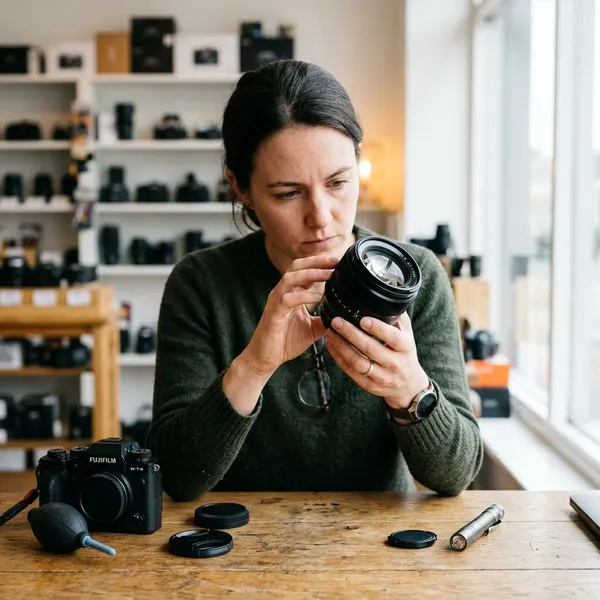
Scratches and coating damage
Light marks on the barrel are mostly cosmetic. Scratches on the glass matter more, especially on the rear element, because damage there is more likely to show up in images.
Ask for angled photos under light, not just clean front-facing shots. Coating damage can hide in ordinary listing photos but show itself later as lower contrast or stronger flare in backlit scenes.
Fungus, haze, and internal dust
A few specks of internal dust are normal in many used lenses and often harmless. Fungus, haze, or separation are different: they can lower contrast, worsen over time, or make repair uneconomical.
- Dust: usually acceptable if test images look clean.
- Fungus: avoid unless you fully understand the repair risk.
- Haze: be cautious, especially for backlit or low-contrast scenes.
- Unclear seller answers: treat them as a reason to walk away.
Focus and zoom ring movement
Focus and zoom rings should move smoothly through the full range, without grinding, catching, or sudden loose spots. On zoom lenses, point the lens downward and check whether the barrel slides too easily; mild movement can be normal on some designs, but severe zoom creep is frustrating in real use.
Aperture and stabilization performance
Change through several aperture settings and watch whether exposure responds normally. On older manual lenses, check that the blades move cleanly and do not look oily or slow.
If the lens has stabilization, test it handheld at slower shutter speeds and listen for abnormal behavior. A soft activation sound can be normal; erratic vibration or no visible help at all deserves caution.
Lens mount condition
The mount should click firmly into place, sit without unwanted play, and show no bent metal, corrosion, stripped screws, or damaged contacts. Light mounting marks are normal, but wobble or electronic errors are not.
Conclusion
The best second-hand camera purchases are not simply the cheapest ones; they are the items where the condition, seller protection, and your real use all line up. If you want the safest starting point, buy used lenses or simple accessories from a reputable source, be more careful with bodies, and walk away from any listing that makes testing or basic questions difficult.