The Canon EOS 200ES camera shoulder bag makes sense if you carry a small DSLR kit and want quick access without a bulky case. It is best for a camera with a standard lens attached, one compact extra lens, and a few small accessories; if your kit includes long lenses or several add-ons, it will probably feel tight.
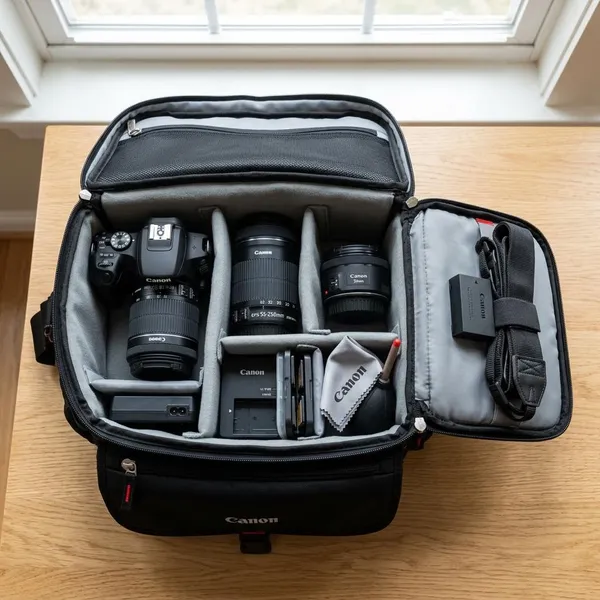
What fits in the Canon EOS 200ES?
The Canon EOS 200ES is built around a light DSLR setup, not a full camera system. The first thing to check is the size of your camera with the lens you normally leave attached, because that combination decides whether the bag feels easy to use or cramped from the start.
DSLR body and attached lens
A DSLR body with a standard kit lens attached is the most natural loadout for this bag. Entry-level Canon EOS bodies with an 18-55mm-style lens are the kind of setup that usually suits the space best.
That ready-to-shoot fit is the main reason to choose a small shoulder bag. For a walk, family visit, or short local outing, you can pull the camera out quickly instead of unpacking a larger camera case.
One or two lenses
Plan on one extra compact lens if you want the bag to stay comfortable. A small prime or short zoom is realistic; a second small lens may fit, but only if the camera body and attached lens are also compact.
- Good fit: DSLR with kit lens plus one small prime.
- Possible but tighter: DSLR with kit lens plus two small lenses.
- Usually awkward: DSLR plus larger zooms that need diagonal packing.
Batteries and memory cards
Small accessories are fine as long as they stay out of the main camera space. Spare batteries, memory cards, a lens cloth, and a slim card case are the right kind of extras for this bag.
A charger can fit in some setups, but it is worth treating it as optional unless you are travelling. For a short afternoon shoot, a spare battery and memory card matter more than filling every pocket.
Kits that may be too large
This is not the right bag for a growing kit with large lenses, a battery grip, a microphone, filters, a charger, and personal items all packed together. It may work as a simple camera-only bag, but it should not be expected to replace a larger travel bag.
- Battery grip attached: the camera may become too tall or awkwardly shaped.
- Long telephoto zoom: it can use up the space meant for other gear.
- All-day travel kit: accessories and personal items quickly overwhelm the bag.
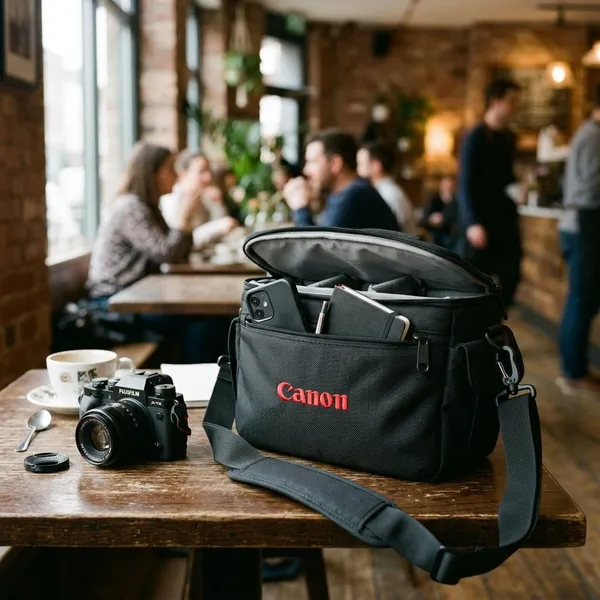
How is it for everyday use?
For everyday use, the Canon EOS 200ES works best when your packing habits are consistent. If you usually carry the same camera, the same standard lens, and one backup lens, the bag feels simple and convenient; if you change lenses constantly or carry extras "just in case," the small size becomes a limitation.
Gear access
A shoulder bag is useful when you want the camera close at hand. You can move it to the front, open it, and grab the camera without taking off a backpack.
Interior organization
The organization is simple rather than flexible. That is a plus for beginners or anyone who does not want to rebuild dividers every time they leave the house.
Carrying comfort
With a light kit, the bag is easy to live with. It stays compact against the body and is less annoying in shops, museums, cafés, or public transport than a larger camera bag.
The comfort tradeoff is weight on one shoulder. For a short commute or weekend walk, that is usually fine. For a full day with heavier lenses, a backpack or larger bag will spread the load better.
Travel and commuting
For travel, think of this as a camera day bag, not your only carry bag. It is useful when you want one DSLR setup ready while the rest of your belongings stay elsewhere.
For commuting, it works if your camera gear is the main thing you need to carry. If you also need a laptop, water bottle, jacket, notebooks, or lunch, a camera insert inside a larger everyday bag may be more practical.
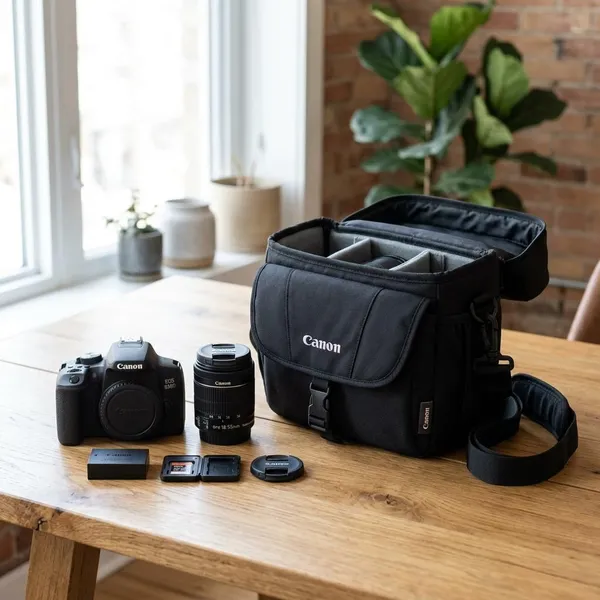
Canon EOS 200ES pros and cons
The Canon EOS 200ES is easy to recommend for a focused beginner or hobby setup, but not for someone who wants room to expand. Its biggest strength is that it keeps you from carrying too much; its biggest weakness is exactly the same thing when your gear list grows.
Compact size
The compact size makes the bag more likely to come with you. A large camera bag can be useful, but many people leave it at home for short errands, casual walks, or family outings.
If your goal is to carry a camera instead of relying on your phone, a small bag can be the better choice. It lowers the effort needed to bring the DSLR along.
Simple organization
Simple organization keeps packing quick: camera, spare lens, battery, memory card, done. There is not much to configure, which is helpful if you are still building your first camera kit.
The tradeoff is that you cannot easily create a custom layout for odd-shaped gear. It is better for predictable packing than for experimenting with different combinations every weekend.
Limited storage
Limited storage is the main reason to pause before buying. If you already know you want to add a telephoto lens, flash, larger charger, or second camera body soon, the bag may become too small quickly.
For someone using one DSLR and one or two modest lenses long term, that limit may not matter. For someone actively upgrading, it is safer to choose a bag with room for the next piece of gear, not just the kit you own today.
Less room for larger lenses
Larger lenses are where the bag stops feeling convenient. A lens that fits only at an angle or presses against other equipment is not a good everyday fit, even if it technically goes inside.
If you shoot wildlife, sports, school events from a distance, or anything that depends on a longer zoom, look for a larger camera bag. The 200ES is better suited to general photography with standard zooms and compact primes.
How to check if your gear fits
The safest way to judge this bag is to test your real setup on paper before buying. Do not measure the camera body alone if you normally store it with a lens attached, and do not forget the small accessories you always carry.
Check your camera size
Measure the camera with the lens attached in the position you expect to pack it. Include anything that changes the shape, such as a strap connector, larger eyecup, grip, or quick-release plate.
Measure your largest lens
Your largest lens is often the deciding item. Measure it with front and rear caps on, because that is the size it takes up when stored safely.
Then think about how it will sit next to the camera. A lens that needs to be wedged diagonally may leave too little room for dividers, making the bag less protective and slower to use.
Allow room for accessories
Set aside space for the accessories you genuinely carry every time, not the accessories you might use someday. For most light outings, that means one spare battery, memory cards, and a cloth before anything else.
- Essential: battery, memory card, lens cloth.
- Useful for longer days: compact charger, small cable, filter case.
- Better elsewhere: bulky chargers, large power banks, personal items.
Leave space between gear
A snug fit is fine; a forced fit is not. Leave enough room for dividers to sit between hard items, and avoid packing lenses so tightly that caps, barrels, or camera controls press against each other.
- Pack your usual setup first. Camera with attached lens goes in before optional items.
- Add your largest spare lens. If access becomes awkward, the bag is too small for that loadout.
- Place small accessories last. If they only fit by stuffing them into gaps, reduce the kit or choose a larger bag.
Conclusion
The Canon EOS 200ES is a sensible choice if you want a small, no-fuss shoulder bag for a basic DSLR setup, especially for short walks, commuting, beginner use, or light travel days. Choose something larger if your main lens is long, your camera has bulky add-ons, or you want space for future upgrades, because this bag is at its best when it carries less rather than more.