If you are comparing an EVIL camera vs DSLR, the practical answer is this: an EVIL camera is just the older name for a mirrorless camera, and mirrorless is usually the better choice for video, autofocus, and future upgrades. A DSLR can still be the smarter buy if you want long battery life, comfortable handling, and good used lenses for less money.
What is an EVIL camera?
An EVIL camera is a mirrorless camera with interchangeable lenses and an electronic viewfinder or screen. The name sounds odd now because the camera industry has mostly stopped using it.
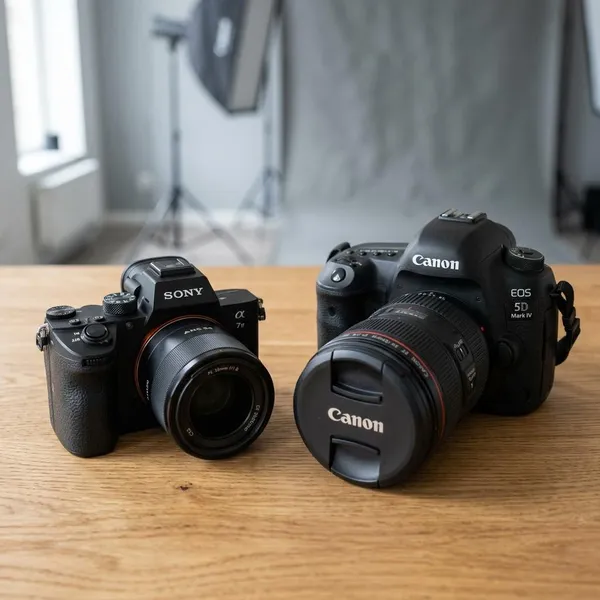
The important difference from a DSLR is the missing mirror. A DSLR reflects light up into an optical viewfinder; an EVIL or mirrorless camera sends the image straight to the sensor and shows you a digital preview.
EVIL means Electronic Viewfinder Interchangeable Lens
EVIL stands for Electronic Viewfinder Interchangeable Lens. "Electronic viewfinder" means you see a sensor-generated preview instead of a purely optical view, and "interchangeable lens" means you can swap lenses for portraits, landscapes, sports, travel, or video.
For a beginner, that live preview can be genuinely useful. If the image is too dark, too bright, or too warm, you can often see the problem before taking the shot rather than finding it later on your computer.
EVIL is an older term for mirrorless cameras
You may still see EVIL in old forum posts, older buying guides, or archived camera reviews, but it is not a separate modern category. If someone says EVIL camera, they almost always mean mirrorless camera.
Mirrorless is the common name today
If you are shopping now, search for mirrorless cameras rather than EVIL cameras. Retailers, manufacturers, and reviewers use terms such as entry-level mirrorless, APS-C mirrorless, full-frame mirrorless, and mirrorless lens mount.
EVIL camera vs DSLR key differences
The biggest difference is how you see and capture the image. Mirrorless cameras use the sensor for a live digital view, while DSLRs use a mirror and optical viewfinder for still photography through the viewfinder.
Before comparing specs, decide what you care about most. If you shoot family, travel, video, or everyday moments, mirrorless usually removes more friction. If you want a low-cost used kit, long battery life, and a traditional photo-first feel, a DSLR can still make sense.
| What matters most to you | Usually better choice | Why it matters |
|---|---|---|
| Video, vlogging, hybrid shooting | Mirrorless | Better live autofocus and newer video tools |
| Lowest used-kit cost | DSLR | Older bodies and lenses can be excellent value |
| Travel and daily carry | Mirrorless | Smaller bodies and compact lenses are easier to bring along |
| Long days without charging | DSLR | Optical viewfinders use less power |
| Learning exposure visually | Mirrorless | The EVF can preview brightness and color before the shot |
Mirrorless design
A mirrorless camera removes the mirror box and prism used in a DSLR. Light goes directly to the sensor, and the camera shows that feed on the rear screen or in the electronic viewfinder.
The benefit is not just technical. A smaller camera is easier to carry on a weekend trip, a city walk, or a family day out, which means you are more likely to use it. The catch is that large lenses can erase much of the size advantage, especially with full-frame systems.
EVF vs optical viewfinder
An EVF shows a digital preview of the final image, including exposure and color changes. An optical viewfinder shows the scene directly through the lens using mirrors and glass.
- Choose EVF if you want exposure preview, focus aids, and easier learning.
- Choose OVF if you prefer a natural view with no screen-like feel.
- Try both if possible, because viewfinder preference is personal.
Size and weight
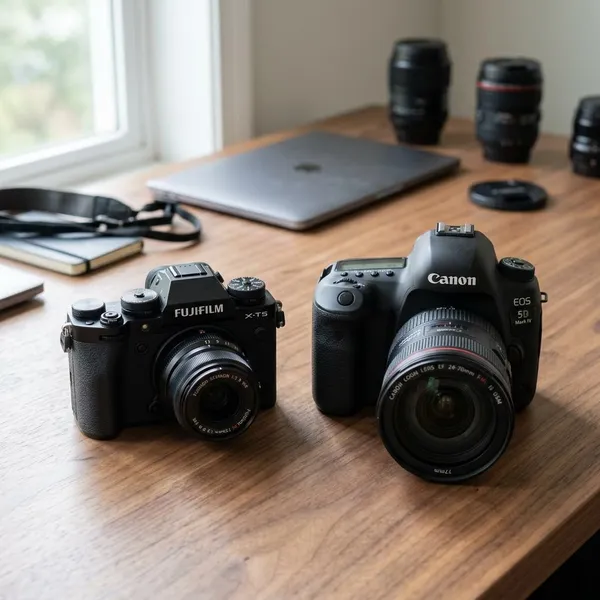
Mirrorless usually wins for portability, especially with a compact prime lens or small travel zoom. That makes it better for people who want a serious camera but do not want to carry a large bag every time they leave the house.
A DSLR can still feel better with heavy lenses. If you shoot sports from the sidelines or use long telephoto lenses, the deeper grip and larger body may feel more balanced than a tiny mirrorless body.
Autofocus
Modern mirrorless autofocus is often easier for everyday users because it can cover more of the frame and track faces, eyes, animals, or moving subjects. For children, pets, casual sports, and events, that can mean fewer missed shots.
Good DSLRs can still focus quickly, especially through the optical viewfinder, but entry-level DSLR autofocus often feels more limited if your subject moves away from the center of the frame.
Battery life
A DSLR usually lasts longer on one battery because the optical viewfinder does not need the sensor and display running all the time. For weddings, hikes, travel days, or long school events, that can be a real advantage.
Mirrorless battery life is manageable, but you should budget for spares. If you are buying your first mirrorless camera, check the price of extra batteries before deciding that the body price fits your budget.
Burst shooting
Mirrorless cameras often offer faster burst shooting, especially with electronic shutters. This helps with birds, pets, sports, or quick expressions where one frame can make the difference.
Do not buy only for the biggest burst number, though. Fast bursts create more files to sort, and autofocus reliability matters more than taking dozens of slightly blurry images.
Video features
For video, mirrorless is usually the safer choice. Most current mirrorless cameras handle video autofocus, face tracking, screen preview, and stabilization features better than comparable DSLRs.
If you only record short family clips once in a while, a DSLR may be enough. If you plan to make YouTube videos, social content, interviews, or regular hybrid photo-video work, mirrorless is the better long-term path.
Lens selection
DSLR systems have a huge used-lens market, which is great if you want to build a kit cheaply. A beginner can often buy an older DSLR body, a standard zoom, and a portrait lens for less than the cost of a newer mirrorless setup.
Mirrorless lens systems are the better direction if you want current bodies, newer lens designs, quieter autofocus, and future upgrade options. Adapters can let some DSLR lenses work on mirrorless bodies, but autofocus speed and features can vary, so check real compatibility for your exact lens and camera mount.
Which has better image quality?
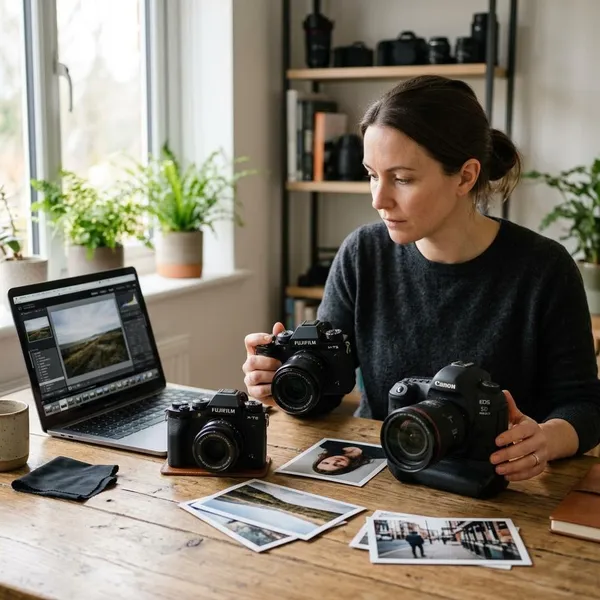
Neither EVIL nor DSLR cameras automatically have better image quality. Sensor size, lens quality, lighting, focusing accuracy, and editing usually matter more than whether the camera has a mirror.
Sensor size matters most
Sensor size is one of the first things to check if image quality matters to you. Full-frame sensors are often stronger in low light and can create shallower background blur, while APS-C cameras usually offer a better balance of price, size, and quality for general use.
For a fair comparison, match similar sensor sizes and similar camera generations. A full-frame DSLR against a small-sensor mirrorless camera is not a fair mirrorless-versus-DSLR test; it is mostly a sensor comparison.
Lens quality affects results
The lens has a major effect on sharpness, contrast, background blur, low-light ability, and overall character. A modest camera with a good lens can easily look better than an expensive body with a weak kit lens.
- For portraits: look for a good prime lens or portrait-friendly zoom.
- For travel: prioritize a sharp, flexible walk-around lens.
- For indoor family photos: a brighter lens often helps more than more megapixels.
Both can deliver professional images
Both systems can deliver professional images in the right hands. Wedding, portrait, landscape, product, and editorial photographers have used DSLRs successfully for years, and mirrorless cameras are now widely used professionally too.
Conclusion
Mirrorless is the better pick if you want the most current autofocus, video features, and upgrade path, while a DSLR still makes sense if price, battery life, and used-lens value matter more. If you are starting from zero and plan to grow your system over time, lean mirrorless; if you want strong photo quality on a tighter budget, a carefully chosen used DSLR kit can still be a very sensible buy.