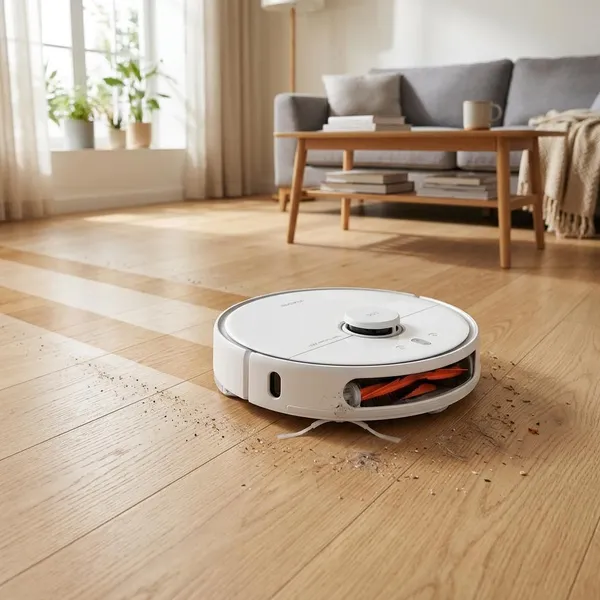
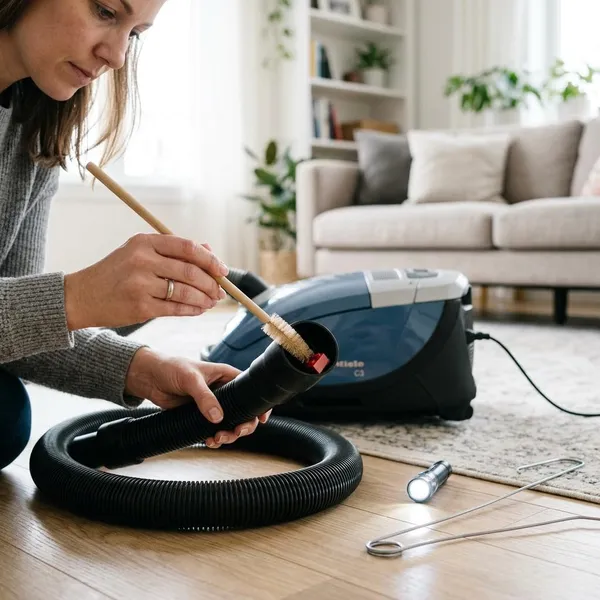
If your main worry is scratching hardwood, start with the floor head, not the brand name. The best battery powered vacuum for hardwood floors should have a soft or hardwood-safe roller, enough suction to pull dust from plank gaps, and a weight you will actually want to use for quick cleanups. If you also have pets or rugs, a mixed-floor head becomes more important than the gentlest possible roller.
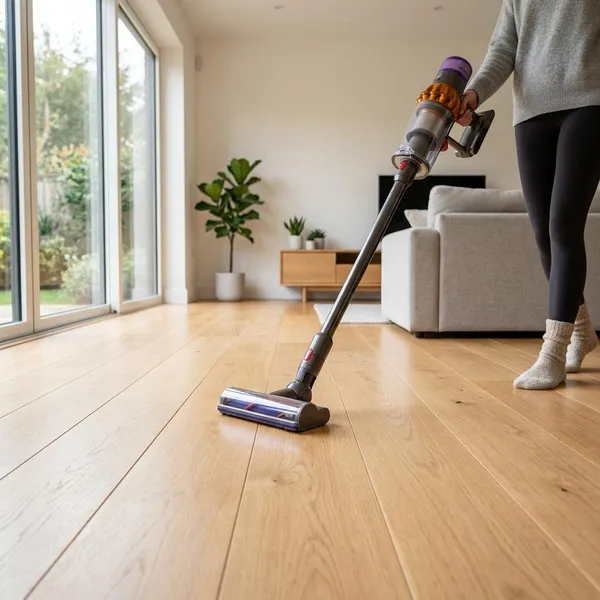
Best Battery-Powered Vacuums for Hardwood Floors
For most hardwood homes, the right choice depends on three things: how much bare wood you have, whether rugs or pets are part of the routine, and whether you prefer a light daily vacuum or a stronger whole-home machine. These four picks cover the most common buying situations without treating every home as if it needs the same vacuum.
| Model | Best fit | Main reason to choose it |
|---|---|---|
| Dyson V12 Detect Slim | Most hardwood-focused homes | Light handling, soft roller cleaning, and useful dust illumination |
| Dyson Gen5detect | Premium whole-home cleaning | Stronger performance for larger spaces and mixed surfaces |
| Levoit LVAC-200 | Budget daily maintenance | Good value for apartments, kitchens, and lighter bare-floor messes |
| Shark PowerDetect Clean & Empty | Pets, rugs, and busier homes | More versatile floor cleaning with easier bin handling |
Dyson V12 Detect Slim is best overall
The Dyson V12 Detect Slim is the easiest recommendation for many hardwood homes because it balances pickup, weight, and floor safety well. Its soft roller head is the main reason it works here: it is better suited to fine dust, crumbs, and hair on sealed wood than a stiff carpet-style brushroll.
Dyson Gen5detect is the best premium pick
The Dyson Gen5detect is the better premium choice if you want stronger whole-home performance and do not mind paying more or handling a slightly heavier machine. On hardwood, the extra power is most useful around edges, floor gaps, textured boards, and busy entry areas where fine grit settles.
- Choose it for larger homes: it feels more appropriate when you clean several rooms in one session.
- Choose it for mixed flooring: it has more range if hardwood connects to rugs or low-pile carpet.
- Skip it for quick-only cleaning: if you mainly want a grab-and-go kitchen vacuum, the V12 may feel easier.
Levoit LVAC-200 is the best budget pick
The Levoit LVAC-200 makes the most sense when your needs are simple: dust, crumbs, hair, and quick cleaning in a smaller home or apartment. It is not trying to beat premium cordless vacuums on suction or filtration, but it can be the more sensible buy if hardwood is your main surface and your messes are moderate.
This is a good fit for someone who vacuums the kitchen after dinner, cleans an entryway a few times a week, or wants a second vacuum upstairs. It is less ideal as the only vacuum for a large home with pets, rugs, and heavy debris, because budget models usually involve compromises in bin size, airflow, or long-term parts support.
Shark PowerDetect Clean & Empty is best for pets and rugs
The Shark PowerDetect Clean & Empty is the practical pick for homes where hardwood is not the only problem. Pet hair moves from wood to rugs, settles along baseboards, and collects near sofas, so a more versatile floor head can be more useful than a hardwood-only specialist.
The auto-empty style dock also matters if you dislike handling dust or pet hair after every clean. It will not make maintenance disappear, but it can reduce the messiest part of using a bagless cordless vacuum.
If your home has mostly open hardwood and no pets, this may be more machine than you need. If you have a dog, area rugs, and daily hair along the walls, it is one of the more realistic choices.
Why These Cordless Vacuums Work Well on Hardwood
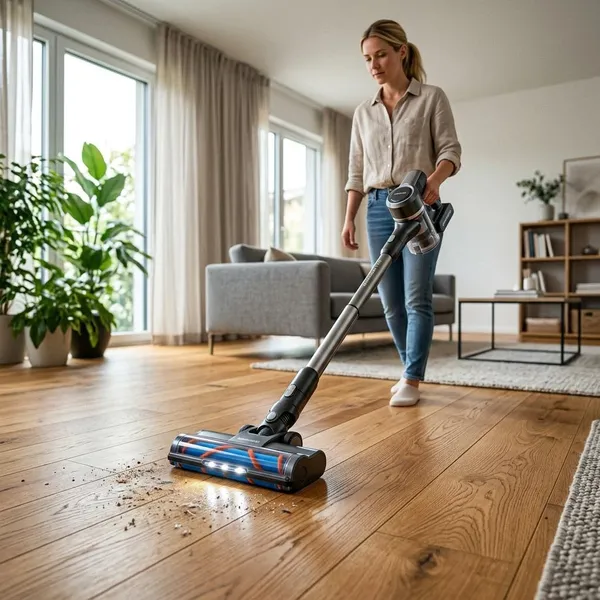
Hardwood cleaning is less about brute force and more about controlled contact. A good cordless vacuum should lift dust without scattering it, glide without dragging grit, and reach the edges where hair and fine debris collect. The floor head matters first; suction, filtration, and handling come next.
Gentle rollers reduce floor contact
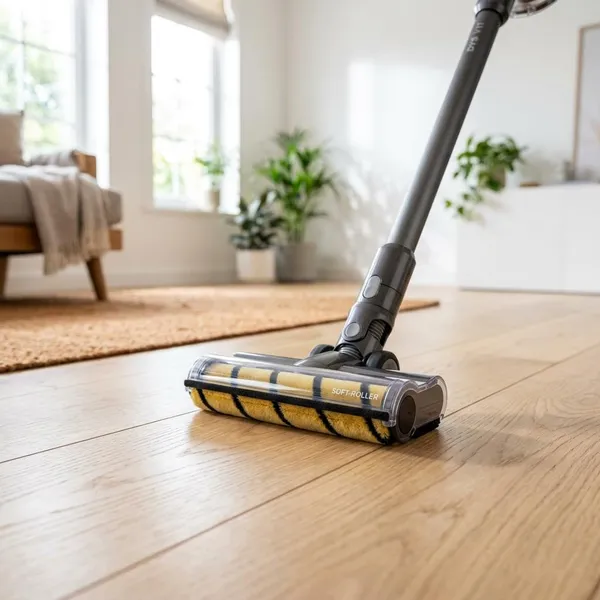
A soft roller is usually the safest design for sealed hardwood because it uses a plush or woven surface instead of aggressive bristles. That broader, gentler contact helps collect flour-like dust and larger crumbs without making the head feel harsh on the finish.
Strong suction lifts dust from gaps
Hardwood may look flat, but dust collects in plank seams, around trim, and in small texture lines. Strong suction helps pull that debris up instead of just moving it across the room.
Low profiles reach under furniture
A low cleaner head makes a real difference under beds, sofas, sideboards, and kitchen toe kicks. These are the places where hardwood starts looking dusty even when the open floor is clean.
Good edge cleaning covers baseboards
Edge cleaning matters because pet hair, grit, and fine dust often end up along baseboards rather than in the middle of the room. If a vacuum leaves a narrow dusty line at the wall, you will need the crevice tool more often than you expected.
Homes with cabinets, hallway trim, or pets should treat edge pickup as a serious buying point. A vacuum that cleans close to the wall saves more time than one that only performs well in open floor tests.
Effective filtration contains fine dust
Hardwood exposes fine dust instead of hiding it in carpet fibers, so filtration affects both cleanliness and comfort. A sealed system and a good filter can help keep dust, pollen, and dander from blowing back into the room while you clean.
- For allergy-sensitive homes: look beyond suction and check whether the system is designed to contain fine particles.
- For bagless models: empty the bin carefully, because dust can escape during disposal even if filtration is good during vacuuming.
- For daily cleaning: clean filters on schedule so airflow does not drop.
Which Vacuum Head Is Best for Hardwood?
The best vacuum head depends on your floor mix. A soft roller is usually best for mostly hardwood homes, a standard brushroll makes more sense when rugs are a major part of cleaning, and a dual-roller head is often the easiest compromise for mixed spaces.
Soft rollers suit hardwood-only homes
Soft rollers are the best match for homes with mostly sealed wood, laminate, tile, or other hard surfaces. They pick up fine dust and dry kitchen debris without the rougher feel of a carpet brushroll.
If your daily routine is cleaning crumbs after breakfast, dust near windows, and hair in the hallway, this is the head style to prioritize. It is less useful if you also need deep agitation on rugs.
Standard brushrolls suit homes with more rugs
A standard brushroll earns its place when rugs or carpeted rooms need regular cleaning. The bristles help disturb fibers and lift debris that a soft roller may skim over.
On hardwood, though, a standard brushroll is not always the most pleasant choice. Some heads scatter larger crumbs or feel too aggressive, especially if the brush is stiff or the wheels are worn. If your home is 80 percent hardwood and only has one small rug, do not buy mainly for the rug.
Dual rollers suit mixed floors
Dual rollers are useful when you move from hardwood to a hallway runner, living room rug, or pet area in the same cleaning session. They reduce attachment swapping and make one cordless vacuum feel more practical for the whole house.
| Your floor situation | Best head type | Why it works |
|---|---|---|
| Mostly hardwood, few rugs | Soft roller | Gentle contact and strong hard-floor dust pickup |
| Several rugs or low-pile carpet | Standard brushroll or motorized rug head | Better agitation for fibers |
| Hardwood plus pets and rugs | Dual roller | Better balance across surfaces with fewer head changes |
How to Vacuum Hardwood Without Scratching It
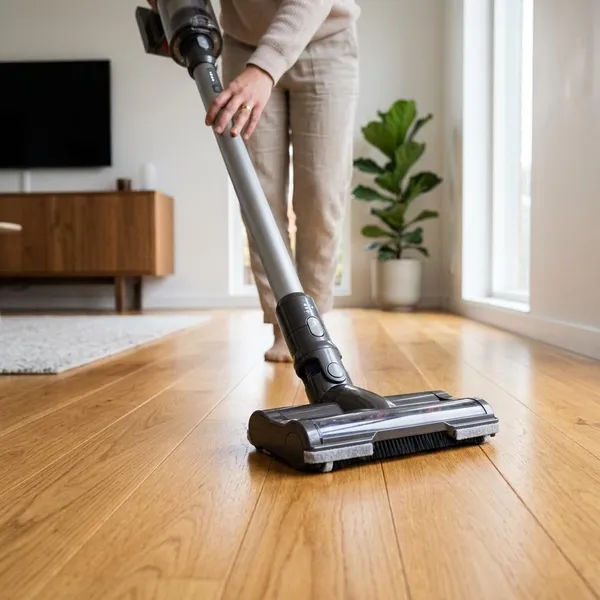
You can vacuum hardwood safely if the parts touching the floor are clean and suitable for wood. The biggest risk is usually not suction; it is grit trapped under the head, worn wheels, or a brush that is too stiff for the finish. Before worrying about advanced features, check the roller, wheels, and underside of the head.
Use a clean hardwood-safe roller
Use a soft roller or a hard-floor attachment when possible. Before cleaning, turn the head over and look for gravel, dried mud, litter, or sharp crumbs stuck in the roller. This quick check matters most after cleaning entryways, mudrooms, or pet feeding areas.
Remove trapped grit from the floor head
Small particles can lodge near the wheels or suction channel and drag across the finish. If you notice faint lines after vacuuming, stop using the vacuum and inspect the underside before making another pass.
- Entry doors: check for sand and outdoor grit.
- Kitchens: look for hard crumbs near the front of the head.
- Litter areas: remove small pellets before moving to other rooms.
Avoid worn wheels and stiff brushes
A vacuum that was safe when new can become less hardwood-friendly as wheels, strips, or rollers wear down. If the head starts scraping, wobbling, or leaving dull marks, inspect the contact points rather than assuming the floor is too delicate.
Use only the power you need
Most sealed hardwood does not need maximum suction for everyday dust and crumbs. Start with the normal or auto setting, then use higher power only for floor gaps, heavy grit near doors, or stubborn debris along edges. This protects runtime and usually makes the vacuum easier to control.
Clean the roller and filters regularly
A clogged filter reduces airflow, and a hair-wrapped roller can make pickup worse. When that happens, people often compensate with extra passes or boost mode, which is less efficient and more tiring.
- Check the head before cleaning gritty areas.
- Remove hair from the roller when it starts wrapping tightly.
- Empty the bin before debris blocks airflow.
- Wash or replace filters according to the brand's instructions.
- Let washable parts dry fully before reinstalling them.
Conclusion
Choose the vacuum around your floor head first, then think about weight, runtime, filtration, and price. The Dyson V12 Detect Slim is the best all-around fit for many hardwood homes, the Gen5detect suits premium whole-home cleaning, the Levoit LVAC-200 is enough for lighter budget use, and the Shark PowerDetect Clean & Empty is the smarter choice when pets and rugs are part of daily life. A clean hardwood-safe head matters more than chasing maximum suction every time.