When something is stuck in a vacuum hose, do not start by ramming a tool through it. The safest way to handle how to get something stuck in vacuum hose out is to confirm the hose is the problem, work from the easiest opening, and use the least force that will move the blockage. Sharp tools, hard jabs, and water are the things most likely to turn a simple clog into a damaged hose.
How to tell if the vacuum hose is clogged
A hose clog usually shows up suddenly. If suction faded slowly over weeks, the filter, dust bin, brush roll, or floor head may be the bigger issue. Start by separating the hose from the rest of the vacuum so you are not chasing the wrong problem.
Suction suddenly becomes weak
A fast drop in suction right after picking up a sock, tissue, food wrapper, toy piece, or heavy clump of pet hair is a strong sign that the hose is blocked. The motor may still sound normal, but dirt stops moving because air cannot pass through the hose freely.
If the vacuum has been losing power for a long time, check the filter and bin first. A hose clog is more likely when the change feels immediate, especially during one specific cleaning job.
Airflow improves when the hose is removed
Remove the hose and briefly test suction at the vacuum inlet. If the machine pulls strongly without the hose attached, the clog is probably in the hose, wand, or handle area.
If suction is still weak with the hose removed, do not spend the next half hour poking the hose. Look at the dust cup, filter, internal duct, or brush head instead.
Debris rattles inside the hose
A rattling or sliding sound usually means a hard object is loose inside the hose. Coins, small toys, pen caps, and bits of plastic often bounce around before they wedge into a bend or cuff.
Soft clogs may not make any sound. A wad of tissue or pet hair can block airflow quietly, so use rattling as a clue, not the only test.
Attachments and floor head are already clear
Check the obvious narrow spots before blaming the hose: the crevice tool, extension wand, floor head, and any pet-hair attachment. Hair and paper often catch where the opening gets smaller.
For a quick check, hold removable tools up to a light and look through them end to end. If those parts are open and suction improves when the hose is removed, the hose is the next place to work.
How to get something stuck out of a vacuum hose
Work in order: disconnect, inspect, shake, pull, then push only if needed. This keeps the clog from being packed tighter and gives you the best chance of removing it without tearing the hose.
Unplug the vacuum and remove the hose
Unplug the vacuum before putting fingers or tools near the hose. This matters even more if the hose connects to a powered floor head or has controls in the handle.
Detach the hose from the vacuum and remove any wand or attachment. Lay it as straight as possible on the floor so bends and tight cuffs are easier to see and feel.
Check both ends for visible debris
Use a flashlight and look into both openings. Many blockages sit close to the handle or machine end, even when they feel as if they are deep in the middle.
- If you can see soft debris: pull it out slowly with your fingers, plastic tongs, or a blunt hook.
- If you can see a hard object: try to lift or turn it gently instead of forcing it straight through a narrow cuff.
- If the edge is sharp: avoid metal scraping and work from the other end if possible.
Straighten and gently shake the hose
Hold the hose as straight as you can, raise one end, and let gravity help. A few gentle shakes or soft taps with your hand can move loose coins, toy pieces, or clumps of dry debris toward the nearest opening.
Use this method for low-risk clogs that still move or rattle. Do not slam the hose against a hard floor; cracked cuffs and bent connectors are harder to fix than the original blockage.
Pull out reachable objects with a blunt hook
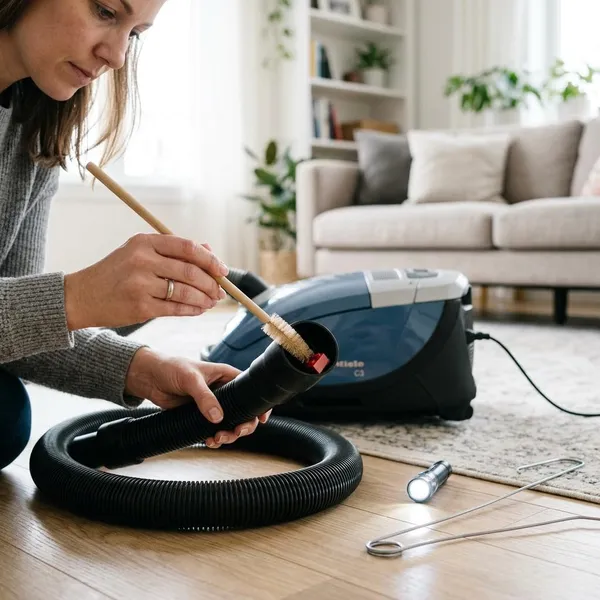
A blunt hook is useful when the object is visible but just out of reach. A plastic grabber, rounded pick, or carefully bent coat hanger can catch paper, hair, fabric, or a wrapper without needing to push it through the hose.
Keep the hook small and smooth. If it scratches, snags the hose lining, or meets strong resistance, stop and change approach.
Push stubborn debris from the opposite end
If you cannot grab the blockage, push it from the opposite side with a smooth wooden dowel, rounded broom handle, or similar blunt tool. Use steady pressure, not quick jabs.
Think about the exit path before pushing. A balled-up tissue may squeeze out through a narrow end, but a toy part or bottle cap may wedge harder if you push it toward the handle bend. For bulky objects, aim for the wider opening whenever you can.
Test the airflow before reconnecting the hose
Once the blockage is out, check the hose before putting every attachment back on. Reattach only the hose, run the vacuum briefly, and feel for steady suction at the open end.
- Strong, steady airflow: reconnect the wand and tools one at a time.
- Pulsing or whistling airflow: check for a second clog or a damaged cuff.
- Still weak suction: inspect the filter, bin, floor head, and internal air path.
How to remove a clog stuck in the middle
A middle-of-the-hose clog needs more patience because you cannot easily see what is happening. The safest choice depends on whether the blockage is soft and movable, hard and wedged, or sitting around a bend.
Use a long wooden dowel carefully
A smooth wooden dowel is usually safer than metal for a deep clog because it is less likely to puncture the hose. Choose one that is clearly narrower than the hose opening and has no splinters or sharp edges.
Push slowly until you feel the blockage, then use short, controlled pressure. If the hose starts to flatten, twist, or kink, stop; that is a sign the clog is not moving cleanly.
Use a flexible vacuum or drain snake
A light flexible snake can help when the clog sits around a curve where a straight dowel will not reach. Choose a plastic or coated tool if possible, and feed it in slowly.
This works best for soft material such as hair, paper, or fabric. A heavy plumbing auger is overkill for most vacuum hoses and can scratch the inside or damage a powered hose.
Reverse the airflow when possible
Reverse airflow can free a loose clog without pushing a rod through the hose. If you have another vacuum, try suction from the opposite end. Short, controlled bursts from a safe blower may also help dry debris move toward an opening.
This is a good option for a light clog after a quick cleanup job, such as dry cereal, pet hair, or paper scraps. Skip strong air pressure if the hose has electrical controls, and do not add water unless the hose is clearly washable for your model.
Work from the wider hose opening
The wider opening gives the blockage more room to exit and gives your tool more room to move. This matters with bulky items like socks, foam pieces, packaging, or odd-shaped toy parts.
Stop if the blockage will not move
If careful shaking, pulling, pushing, or reverse airflow does not shift the clog, stop before the hose is damaged. More force can split the hose wall, crack the cuff, or break wiring in a powered handle.
- Stop sooner with powered hoses: hidden wires can be damaged before you notice anything outside.
- Stop if the hose deforms: flattening or twisting means the tool is stressing the hose, not moving the clog.
- Stop if the object feels locked in place: a hard item wedged in a bend may need repair-shop tools or hose replacement.
For an old, brittle, or already leaking hose, replacement may be the more sensible fix. For an expensive brand-specific hose, a repair shop may be worth trying before you buy a new one.
Conclusion
The best fix is usually the calmest one: confirm the hose is clogged, remove anything visible, and only then use a blunt tool or reverse airflow. If the blockage moves, keep working gently; if it refuses to budge or the hose starts to deform, stopping early is the smarter choice because a torn or wired hose can cost more than the clog is worth.