The best cordless vacuum is not simply the one with the strongest suction; it is the one that fits your floors, your cleaning time, and the messes you actually deal with. For most homes, start with floor type, then check realistic battery life, weight, filtration, and how easy the brushroll is to maintain. A cheaper model can be the smarter buy for quick hard-floor cleanups, while pets, thick rugs, allergies, or a larger home usually justify paying for better tools and battery options.
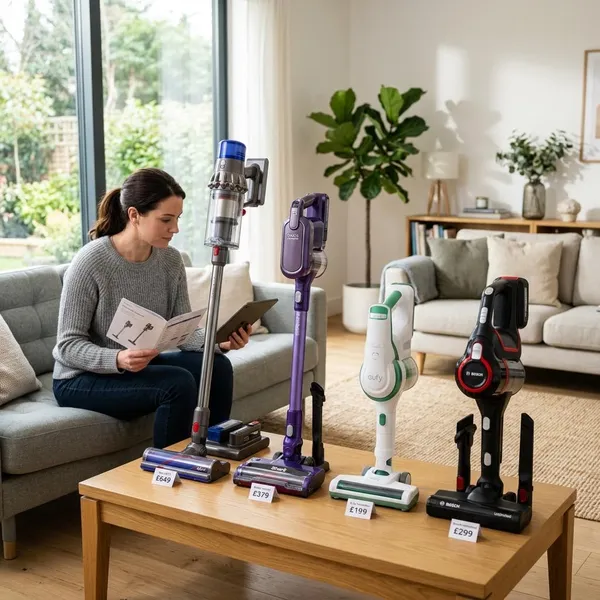
How to Choose a Cordless Vacuum
Choosing well starts with separating daily convenience from deep-cleaning expectations. A cordless vacuum is excellent when it is easy to grab, light enough to use often, and strong enough on normal settings without forcing you into max mode every time.
- First: match the cleaner head to your floors.
- Second: check real usable runtime, not only the advertised maximum.
- Third: decide whether hair, dust allergies, or storage will be daily annoyances.
- Last: compare premium extras such as screens, lights, docks, and app features.
Match it to your floor types
Hard floors usually benefit most from a soft roller because it picks up fine dust and crumbs without scattering them across wood, tile, vinyl, or laminate. Carpet needs more brush agitation, so a bristled or dual-roller head is usually more useful than a soft roller alone.
If your home is mostly hard flooring with a few rugs, prioritize smooth handling and a good hard-floor head. If you have wall-to-wall carpet, thick rugs, or pets that shed into fibers, choose stronger carpet pickup before paying extra for cosmetic features.
Allow enough runtime for your home
Advertised runtime is often measured on the lowest setting, sometimes without a powered floorhead. Real cleaning with a motorized head, auto mode, rugs, or pet hair will usually be shorter.
Compare weight and balance
A cordless vacuum can look light but still feel tiring if the motor and battery sit high near your hand. This matters most when cleaning stairs, sofas, curtains, car interiors, or anything above the floor.
Check the brushroll design
The brushroll decides how well the vacuum handles dust, crumbs, carpet fibers, and hair. Soft rollers are best for hard floors, bristled rollers dig better into carpet, and dual-roller heads are convenient for mixed-floor homes.
- Long hair or pets: look for anti-wrap fins, combs, or a conical hair tool.
- Mostly kitchen messes: choose a head that pulls in larger crumbs instead of pushing them forward.
- Mixed flooring: a head that transitions smoothly can matter more than a small suction upgrade.
Look for sealed filtration
Good filtration is about the whole system, not only the filter label. A sealed design helps keep fine dust inside the vacuum instead of leaking it back into the room while you clean.
This becomes more important in bedrooms, nurseries, allergy-prone homes, or homes with lots of rugs and textiles. Also check how the bin empties; a strong filter is less helpful if every emptying creates a dust cloud.
Choose useful attachments
Attachments are worth paying for only when they match your routine. A mini motorized brush is useful for pet beds, sofas, stairs, and car seats. A crevice tool helps along baseboards, between cushions, and in tight corners. A dusting brush is handy for shelves, vents, and delicate surfaces.
Consider storage and charging
The easier a vacuum is to store and charge, the more likely you are to use it. Wall mounts save space, freestanding docks avoid drilling, and larger self-emptying stations can reduce dust contact but need more floor space.
Which Cordless Vacuum Features Matter Most?
The features that matter most are the ones that reduce friction in real use: better pickup on your floors, less hair maintenance, less dust exposure, or fewer battery interruptions. Premium features are worth it when they solve a problem you already have, not when they only make the spec sheet look better.
| Home situation | Feature to prioritize | Why it matters |
|---|---|---|
| Mostly hard floors | Soft roller | Better fine-dust pickup with less scattering |
| Pets or long hair | Anti-tangle brush and mini motorized tool | Less roller cleanup and better upholstery pickup |
| Large home | Replaceable battery | Less waiting between rooms |
| Dust-sensitive household | Sealed filtration or cleaner emptying | Less dust escaping during use and disposal |
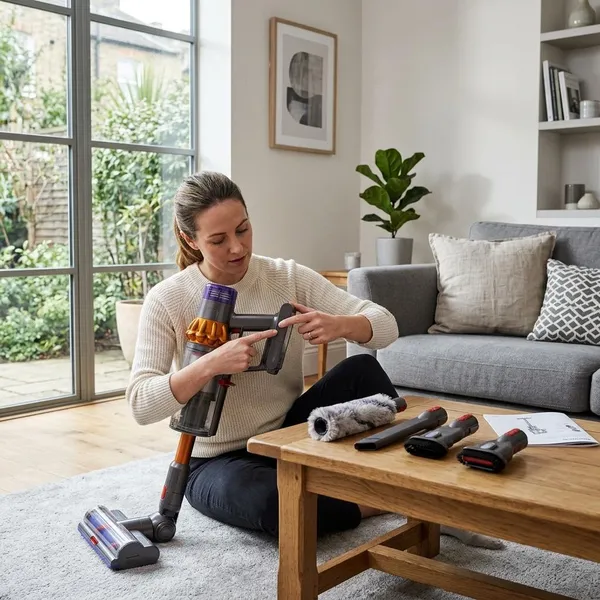
Soft rollers protect hard floors
A soft roller is one of the clearest upgrades for wood, tile, laminate, and vinyl. It gathers fine dust and small debris with gentler contact than a stiff bristle brush, which helps prevent scattering and makes quick kitchen or hallway cleanups easier.
Anti-tangle brushes handle hair
Anti-tangle designs are useful when hair is a constant mess, not just an occasional problem. They guide hair toward the bin instead of letting it wrap tightly around the roller, although they still need cleaning sometimes.
Auto modes balance power and runtime
Auto mode is practical because it raises suction only when the floor or debris needs it. That usually gives a better everyday balance than running max mode everywhere.
Replaceable batteries extend cleaning time
A removable battery is worth considering if you clean large areas, use the vacuum daily, or want to keep the machine for several years. When runtime drops with age, replacing the battery can be cheaper than replacing the whole vacuum.
- Occasional spot cleaning: one built-in battery may be enough.
- Whole-home cleaning: a spare battery can prevent mid-clean waiting.
- Long-term ownership: check that replacement batteries are easy to buy.
Sealed filters control fine dust
Sealed filtration matters when fine dust is more than a cosmetic issue. A vacuum can have strong suction and still feel disappointing if dust escapes through gaps around the bin or filter housing.
Self-emptying docks reduce dust contact
A self-emptying dock is not essential, but it can be genuinely useful in homes with pets, allergies, or frequent quick cleanups. It reduces how often you handle the small onboard bin and keeps dust contained in a larger bag or container.
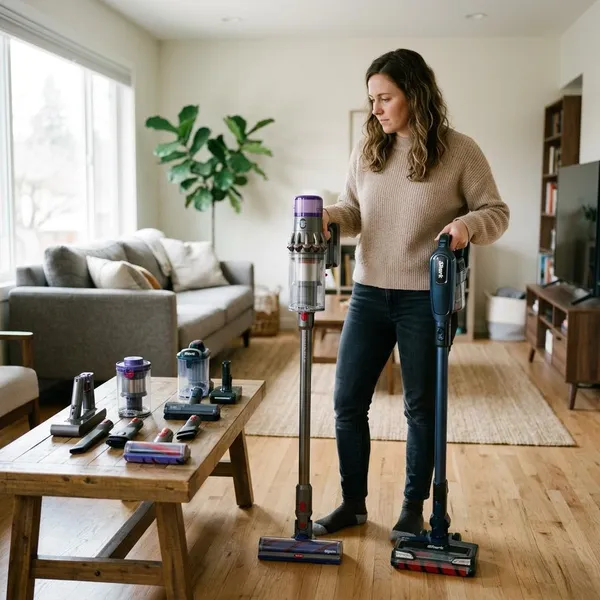
Cordless Vacuum Tradeoffs to Consider
Cordless vacuums are convenient because they remove the cord, but they also bring limits: smaller bins, battery dependence, charging time, and more maintenance around hair and filters. The right question is not whether these tradeoffs exist, but whether they matter in your home.
For a light-use household, the convenience often outweighs the limits. For thick carpets, heavy pet shedding, or long weekly cleaning sessions, you may need a higher-end cordless model, a second battery, or even a corded vacuum for occasional deep cleaning.
Maximum power drains batteries quickly
Max mode is best treated as a short boost for stubborn dirt, not the setting you use for every room. It can be helpful on a dirty rug, stairs, or a pet-heavy sofa, but it usually cuts runtime sharply.
Small bins need frequent emptying
Small bins keep the vacuum slim and light, but they fill quickly with pet hair, cereal, litter, and carpet fluff. In a larger home, you may need to empty the bin before you finish cleaning.
Heavy motors strain the wrist
Top-heavy designs can strain your wrist because the motor, battery, and bin sit near the handle. This is less noticeable during a two-minute floor cleanup and much more noticeable when cleaning stairs or holding the vacuum above shoulder height.
If you plan to use the vacuum as a handheld often, choose balance and comfort over the largest motor. Raw power is less useful if the machine feels awkward after a few minutes.
Long charging times interrupt cleaning
Some cordless vacuums need several hours to recharge fully. That may not matter for a studio apartment, but it can be frustrating if the battery dies halfway through a weekend clean.
A second battery, faster charging, or a dock that makes charging effortless can solve this. Without one of those, be realistic about how much area you can clean in one session.
Replacement batteries add cost
Batteries wear down over time, and replacements can be expensive. Before choosing a model for long-term use, check whether genuine batteries are available and whether the price still makes sense compared with buying a new vacuum later.
This is where a cheap cordless vacuum can become less cheap. If parts are hard to find, the lower upfront price may not be the best value.
Hair still needs occasional removal
Anti-tangle brushes reduce hair wrap, but they do not make a vacuum maintenance-free. Long hair, thread, pet fur, and fibers can still collect around rollers, wheels, and narrow channels.
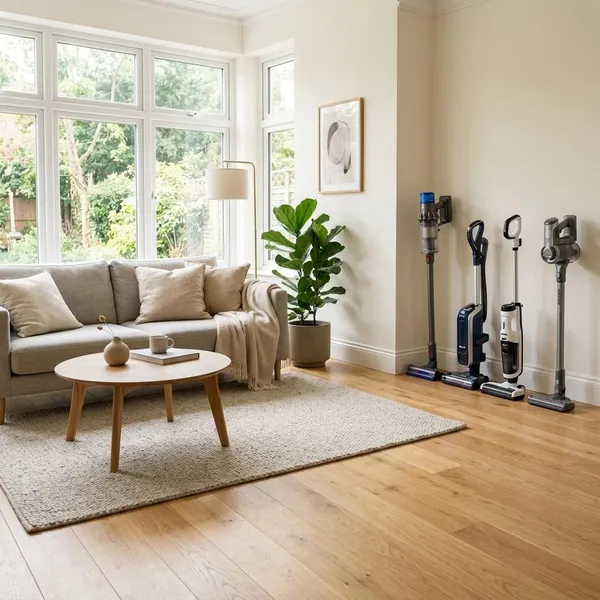
Conclusion
A cordless vacuum is a good buy when it removes friction from the way you already clean: the right head for your floors, enough real runtime, comfortable handling, and dust or hair control where you need it. Do not pay for every premium feature just because it exists; pay for the ones that fix your daily annoyances. If the vacuum is easy to grab, easy to empty, and strong enough without constant max mode, it is far more likely to become the one you actually use.