If you want to check a hotel room, rental, office, or guest space, a hidden camera detector helps most when you know what it can and cannot find. Start by choosing the detection method that matches your concern: wireless signals, camera lenses, or magnetic devices. The safest approach is usually a quick visual check first, then a detector sweep, then careful verification before assuming anything is malicious.
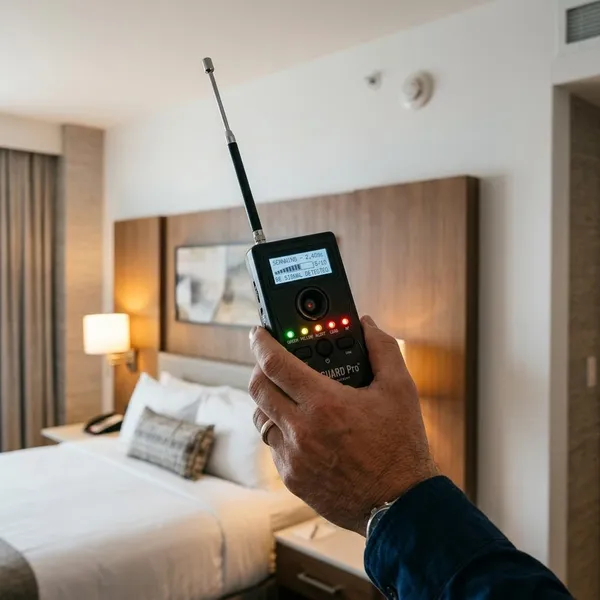
Best hidden camera detectors
The best option depends less on the brand name and more on the situation you are trying to solve. A frequent traveler usually needs a compact all-in-one tool. Someone worried about cameras that record locally may be better served by optical lens detection. If your main concern is an active wireless device, RF detection should be high on your list.
| Detector | Best fit | Main strength | Watch out for |
|---|---|---|---|
| Sherry K68 | Travel and general room checks | Combines several detection methods | May still need patient verification in signal-heavy rooms |
| JMDHKK K18+ | Lower-cost RF scanning | Simple way to look for active wireless signals | RF alerts can come from normal electronics |
| SpyFinder Pro | Finding camera lenses | Useful for cameras that are not transmitting | Slower and more manual than an RF sweep |
How hidden camera detectors work
Consumer hidden camera detectors usually look for one of three clues: radio signals, lens reflections, or magnetic parts. None of these methods is perfect on its own. The practical goal is to collect enough clues to decide whether an object deserves closer inspection.
RF detection finds active wireless signals
RF detection looks for radio frequency activity from devices that are transmitting. That can include some wireless cameras, microphones, and trackers, but only when they are active enough for the detector to notice.
Use RF as a fast first pass, not as final proof. Turn off your own hotspot, Bluetooth accessories, and extra electronics if you can, then move slowly around clocks, chargers, smoke detectors, lamps, routers, and wall fixtures. A repeatable peak near one object matters more than random beeping in the middle of the room.
Optical detection finds reflective camera lenses
Optical detection uses light and a viewing filter, or a similar lens-finding setup, to make small camera lenses reflect. This is the method to care about when you are worried about a camera that is not broadcasting a signal.
It works best when you slow down. Check tiny holes, dark plastic panels, clock faces, mirrors, vents, charger fronts, and decorative objects that face private areas. If a reflection appears only from one angle, change your position and look again before dismissing it.
Magnetic detection finds some concealed devices
Magnetic detection is a narrower tool. It may help with some trackers or devices attached with magnets, but it is not the main way to find a tiny camera lens in a room.
Treat it as a bonus layer. It can be useful when checking luggage, a vehicle, a metal bed frame, or an object that feels oddly placed, but it should not replace RF scanning or a careful lens check.
Multi-function detectors combine several methods
A multi-function detector combines the methods most everyday users need: a quick RF scan, a lens-finding mode, and sometimes magnetic sensing. That is why this format makes sense for travel, where you may only have a few minutes before unpacking.
The advantage is convenience, not perfection. A dedicated optical tool may be better for lens work, and a higher-end RF detector may offer more control. For a normal traveler or home user, though, one device that supports a repeatable routine is often the most realistic choice.
Which hidden camera detector should you choose?
Choose based on your highest-risk situation first. If you are checking a hotel room after a late arrival, portability and speed matter. If you are doing a more serious sweep at home or in a rental, slower optical checking may be worth the extra time.
Multi-function detector for travel
For travel, a multi-function detector is usually the most balanced choice. It lets you do a quick RF pass around the room, then switch to lens detection for objects facing the bed, bathroom entrance, desk, or seating area.
This is also the most practical choice for occasional users. You do not need to build a specialist kit, and you are more likely to use one small device consistently each time you enter a new hotel room or short-term rental.
RF detector for active wireless devices
Pick an RF detector if your main worry is a device that is currently sending data. It is useful for a quick sweep in a small room, especially when you can reduce your own signal clutter before scanning.
It is less suitable as your only tool in a high-privacy situation, such as checking a bedroom or bathroom in a rental. A camera that stores footage locally may not give you the RF signal you are hoping to find.
Optical lens finder for offline cameras
An optical lens finder is the better choice when you want to check for the physical lens itself. That makes it especially relevant for cameras that are off, disconnected, or recording internally.
- Good fit: careful checks in bedrooms, bathrooms, changing areas, and private offices.
- Less ideal: rushed scans when you only have a minute or two.
- Best habit: inspect only objects with a useful line of sight instead of every shiny surface.
Compact detector for quick room checks
A compact detector is worth considering if you value consistency over maximum depth. The small tool you keep in your carry-on is more useful than a better one left at home.
For a low-risk overnight stay, a compact detector plus a focused visual check may be enough to feel more comfortable. For a longer rental, a shared living situation, or a room where something already seems suspicious, spend more time and use optical verification as well.
How to check a room for hidden cameras
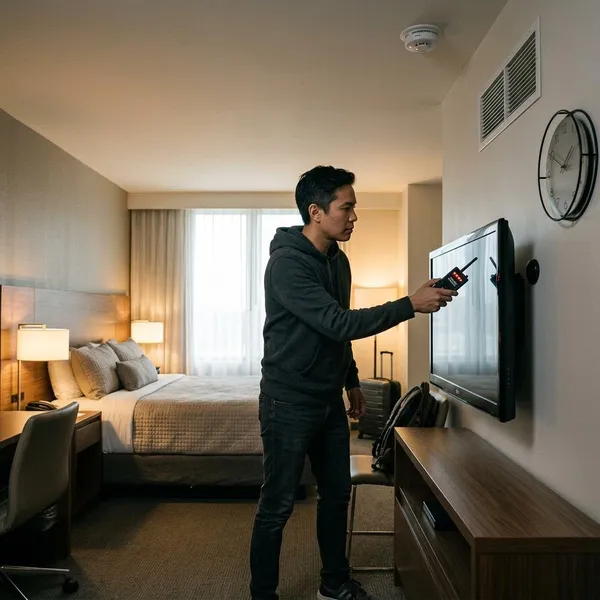
The most reliable room check is layered: look first, scan second, verify third. Start with objects that have a clear view of private areas rather than treating every item in the room as equally suspicious.
Inspect likely hiding places first
Start with the obvious line-of-sight objects: smoke detectors, alarm clocks, USB chargers, mirrors, TV units, picture frames, lamps, vents, shelves, and wall decor. A hidden camera needs a view, so an object facing the bed or bathroom entrance deserves more attention than one tucked behind a curtain.
Scan the room for unusual RF signals
Move slowly and scan in zones instead of waving the detector around. If the reading rises near a charger, lamp base, smoke detector, or clock, step away and approach again from another direction.
Normal electronics can trigger RF alerts, so compare the signal with the object's purpose. A router transmitting is expected. A decorative item giving a repeated strong reading is more worth checking.
Check suspicious objects for camera lenses
When an object feels off, look for the lens path. Tiny pinholes, dark circles, glossy dots, uneven seams, and small openings are more meaningful when they face a private area.
Change your viewing angle before deciding. A lens may flash only from the side or from a lower position, while a screw or plastic trim usually reflects in a more ordinary way.
Narrow down and verify each alert
Verification keeps you from chasing every beep or reflection. A single clue is weak; a repeated RF peak, a strange opening, unexplained wiring, and a direct line of sight together are much stronger.
- Repeat the pass to see whether the alert returns in the same place.
- Compare similar objects such as two smoke detectors or two chargers.
- Look for a reason the object would need power, a hole, or a hidden compartment.
Repeat the sweep from different angles
A short second sweep is worth doing, especially in bedrooms, bathrooms, and work areas. RF readings can shift depending on where you stand, and lens reflections are highly angle-dependent.
If nothing repeats, you may have found normal signal noise or harmless reflections. If the same object keeps standing out, do not dismantle property; document what you see and raise the concern with the host, hotel, landlord, or appropriate authority depending on the situation.
Conclusion
The most useful choice is the detector you can match to your real risk and use calmly: multi-function for travel, RF for active wireless signals, and optical detection for cameras that may not be transmitting. Do the simple checks first, focus on objects with a real line of sight, and treat alerts as clues to verify rather than instant proof.